Alright, let’s cut to the chase if you’re stuck picking countertops for your kitchen, bathroom, or even that home bar you’ve been hyping up. I’m a quartz slab supplier, so I’ve got skin in this game—but I’m not gonna BS you with sales fluff that ignores the real, messy stuff people actually deal with daily. Let’s break down quartz vs. concrete, straight up, no fancy industry jargon that makes your eyes glaze over. Quartz Slab
First, let’s get one thing straight: concrete is cool. There’s a reason every mid-century modern home has it, and why it’s still popping up in Instagram reels. It’s custom, you can tweak it with pigments, aggregates, even embed small mementos (like a tiny seashell from your beach trip) for that one-of-a-kind vibe. But here’s the thing—concrete is high-maintenance. I’ve had contractors come to me asking for quartz replacements after a year of concrete installs, and the stories they tell? Wild. Let’s talk stains. If you spill red wine on concrete and don’t wipe it up in, like, 10 minutes? That’s a permanent mar. Same with coffee, tomato sauce, even some dark cooking oils. Concrete is porous, so it needs to be sealed every 1-2 years, religiously. Skip a seal, and you’re looking at pitting or discoloration from regular use—like that area right by the sink that gets splashed with hard water? It’ll etch over time, leaving dull spots you can’t sand out easily.
Quartz slab, on the other hand, is non-porous. That’s its biggest superpower. It’s made by mixing ground quartz (like 90-95% of the stuff, yep, it’s the same mineral that makes countertops durable) with polymer resins and pigments, then pressed and cured under extreme heat. There’s no gaps, no tiny little holes where gunk can seep in. I have clients who spill coffee, red wine, even turmeric (that’s the worst for stains!) and just wipe it up with a paper towel. No scrubbing, no panic. No annual sealing required—ever. That’s a huge win for people who don’t want to add another chore to their to-do list, or for rental properties where you don’t want to deal with maintenance between tenants.
Durability is another big one, and this is where concrete trips up. Concrete is strong, but it’s brittle. Drop a cast-iron skillet on a concrete countertop? Chances are you’re gonna have a crack, or at minimum a chip that’s super noticeable. Even regular use—like setting heavy pots on the edge—can cause stress cracks over time. Repairing concrete is possible, but it’s a pain. You have to match the pigment exactly, sand the area smooth, and it still might look off. Quartz slab? It’s engineered to take a beating. The resin binder makes it flexible enough to handle minor impacts, but the quartz in it is hard enough to resist scratches from knives (I mean, don’t go chopping directly on it—use a cutting board, that’s common sense—but if you slip? No problem). I’ve had clients drop a glass bottle full of olive oil on a quartz counter and it didn’t even leave a mark. Scratches? If you do get a light scratch, most manufacturers will polish it out easily, no hassle. Concrete scratches way easier, and deep scratches can’t be fixed without a total refinish.
Wait, let’s talk about installation. This is a detail most people don’t think about until they’re stuck waiting three weeks for their countertop. Concrete is a wet craft. You have to mix the cement, pour it on-site or form it, let it cure for days, then seal it. That means installation takes time, usually a few trips to your house, and it’s messy—dust, wet concrete everywhere, you might have to cover your floors for a day or two. Not ideal if you’re renovating a kitchen and want to use it in a week. Quartz slab is pre-manufactured in a controlled factory, so it’s ready to go when it arrives. Installation usually takes a half-day to a day, no mess, no waiting around for curing. It’s also more predictable in terms of sizing and thickness—no surprises where a concrete slab came out thinner than you thought.
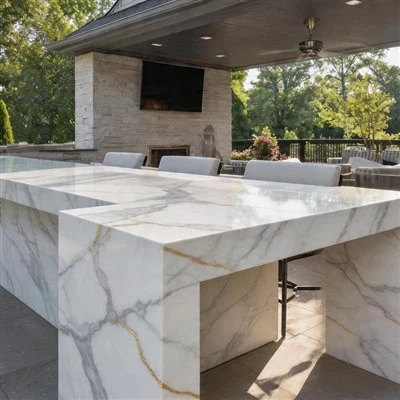
But let’s be fair—concrete isn’t all bad. If you want a super unique look, concrete can give you that rustic, industrial, almost concrete art feel. You can add different aggregates like glass chips, stones, even recycled material, so no two pieces are exactly the same. If you’re going for a specific custom vibe—like a farmhouse kitchen with that matte, earthy concrete look—concrete can nail that. Also, it’s warmer under your feet than quartz? Wait, no—actually, both are solid surfaces, but some people say concrete has a more “organic” feel. But here’s the catch: that custom look comes at a price. Concrete can be more expensive than quartz, depending on the complexity of the finish and the amount of labor needed. And if you make a mistake in measurements? Good luck—you might have to start over, which adds more cost. Quartz comes in thousands of colors and patterns now, too—from solid whites that look like marble, to concrete-lookalikes (called “engineered concrete quartz,” funny enough) that give you that custom vibe without the maintenance. You don’t have to sacrifice style for ease.
Wait, what about heat? That’s a big one for kitchens. I always tell people: never set a hot pan directly on either surface. Both quartz and concrete can get damaged by extreme heat—concrete can crack, quartz can blister the resin and leave a dull spot. So don’t go pouring a boiling pot of pasta straight from the stove onto your counter. Use a trivet. That’s a no-brainer, right? I had a client last year who thought quartz was heat-proof, set a hot Dutch oven on it, and left it there for 20 minutes—she got a faint mark, but we polished it out in 10 minutes. Concrete? That same hot pan would have left a permanent discoloration that would require a whole refinish.
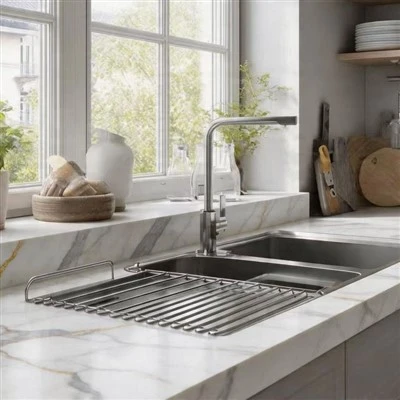
Maintenance, like I mentioned earlier, is where quartz crushes concrete. I talked about sealing concrete—most people forget, and that’s why their counters look dull after a year. Quartz? Wipe it down with any regular household cleaner (even mild bleach, if you need to disinfect) and you’re done. No special products, no annual appointments, no stress. For busy people, parents with kids, or anyone who just wants their home to function without extra work, quartz is a game-changer. It’s also resistant to mold and bacteria, because it’s non-porous. If you spill raw meat juice on it? Wipe it up, no mold growth in the crevices. Concrete, even sealed, can still trap bacteria in tiny pores if you don’t clean it properly.
Let’s touch on longevity. A well-sealed concrete countertop can last 10-15 years, maybe longer if you’re super careful. Quartz? Most quartz slabs have a 10-25 year warranty, and many last 30+ years with regular use. I have a client who had quartz counters in her first home 18 years ago, moved, and had them reinstalled in her new place—they still look almost brand new. That’s a big return on investment if you’re renovating to sell your home, too. Quartz holds its value better because it’s a low-maintenance, popular choice that most buyers prefer over concrete, which they see as a hassle.
Wait, are there any downsides to quartz? Let’s be real, no product is perfect. Quartz is a man-made material, so some people say it’s less “natural” than concrete. If you’re super into natural, eco-friendly products, concrete might feel like the better pick—but here’s the thing: most quartz manufacturers use recycled materials too, and the polymer resins are non-toxic these days. Also, quartz patterns are consistent, so if you need a replacement later, it’s easy to match the color and pattern. Concrete is unique, so if you chip a piece, it’s almost impossible to get an exact match. Another downside: quartz can be more expensive upfront than basic concrete, but when you factor in the cost of sealing, repairs, and maintenance over time, quartz ends up being cheaper in the long run. For example, if concrete is $50/sq ft and quartz is $70/sq ft, but you have to pay $10/sq ft every year for sealing and $200 for a repair every other year, quartz will save you money after 3-4 years.
Now, let’s get to my end of this—since I’m a quartz slab supplier, I don’t want to sell you something you don’t need. If you’re looking for a custom, one-of-a-kind look and you don’t mind the upkeep, concrete is cool. But if you want a countertop that’s durable, low-maintenance, easy to clean, and will last for years without a ton of work? Quartz slab is the way to go. I work with homeowners, contractors, designers—everyone—and I’ve seen way too many people regret choosing concrete because of the stains or the repairs. Quartz is versatile too—we have finishes that mimic marble, granite, concrete, even wood (wood-look quartz is huge for bathrooms and modern kitchens) so you don’t have to settle for boring, same-old stuff.
If you’re ready to stop stressing about countertop maintenance, or you’re a contractor looking for a reliable, easy-to-install material for your projects, hit me up to talk through your needs. We can send samples, answer all your questions, and help you pick the right quartz slab for your space, no pressure. I’m not here to push you into a sale that doesn’t fit—just to help you make a choice that works for your home and your life.
Now, let’s wrap this up quick, no extra fluff. At the end of the day, it’s all about what you value: unique, custom vibes or easy, low-stress use. Concrete is great for the right person, quartz is great for almost everyone else. And as your quartz slab supplier, I’m here to help you make that call.
Commercial Quartz Countertop References:
- National Kitchen & Bath Association. (2023). Countertop Material Durability and Maintenance Guide. NKBA Publications.
- Marble Institute of America. (2022). Engineered Quartz vs. Natural Stone Countertop Comparison. MIA Technical Bulletins.
- Concrete Network. (2023). Pros and Cons of Concrete Countertops for Residential Spaces. Concrete Resource Library.
- US Department of Energy. (2022). Home Renovation: Cost and Longevity of Common Surfaces. DOE Office of Energy Efficiency & Renewable Energy.
- Quartz Countertop Association. (2023). Maintenance and Care Best Practices for Engineered Quartz Surfaces. QCA Industry Standards.
Wuhu Junde New Material Technology Co., Ltd.
As one of the most experienced quartz slab manufacturers and suppliers in China since 1998, we warmly welcome you to wholesale top-quality quartz slab made in China here from our factory. If you have any enquiry about cooperation, please feel free to email us.
Address: No.8 Yulin Road, Xinwu Economic Development Zone, Anhui Province, China
E-mail: 1127319898@qq.com
WebSite: https://www.jundequartz.com/
