If you’ve ever walked through a local bakery, a family-run dumpling shop, or even a small catering space, you’ve probably seen a line of perfectly formed pastries, dumplings, or mochi that look identical—no misshapen edges, no uneven filling, just consistent, professional-looking products. For small home businesses, that level of uniformity can feel out of reach, especially when you’re balancing recipe development, customer orders, and the day-to-day grind of running a small operation. That’s where encrusting machines come in, and over the last five years, I’ve fielded hundreds of questions from home bakers, food truck owners, and craft dessert makers asking the same thing: “Are there encrusting machines actually designed for small home businesses, not just large commercial factories?” Encrusting Machine
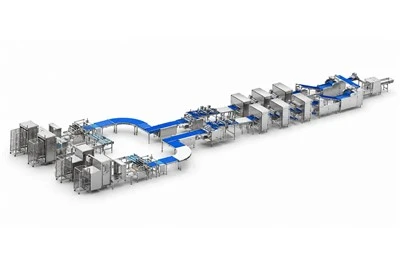
Let me start with a little context. When I first launched my encrusting machine supply business, back in 2018, most of the options on the market were either too big, too expensive, or too complicated for someone running a business out of their garage, spare bedroom, or a 500-square-foot commercial kitchen. The standard industrial encrusting machines I saw were built for factories turning out thousands of units an hour—they took up 10+ feet of counter space, required dedicated 220-volt wiring, and cost anywhere from $10,000 to $30,000, which was out of reach for most home-based entrepreneurs who were just scaling from selling to friends and family.
That gap left a lot of small business owners stuck: either they kept forming products by hand, dealing with inconsistent quality that made repeat customers slip away, or they took on debt for equipment that wasn’t a good fit for their low-volume, flexible needs. Over time, manufacturers started listening. Today, the market is full of encrusting machines purpose-built for small home businesses, and they’re not afterthoughts—they’re designed to solve the exact pain points my customers tell me about.
First, let’s break down what makes a machine right for a small home business, because not every “mini” encrusting machine is created equal. A good option for someone running a home-based operation shouldn’t require a full kitchen renovation to install. Most models we supply are compact—think 2 to 3 feet long, weighing 50 to 70 pounds—so they fit on standard countertops, no need for a dedicated industrial space. They run on 110-volt power, which is standard in most home and small commercial kitchens, so no hiring an electrician to upgrade your wiring. That’s a huge win: I’ve had customers tell me they set their machine up on a foldable table in their garage, pull it out when they need it, and tuck it away when they’re done, because it doesn’t take permanent space.
Next, cost is a make-or-break factor for small home businesses. When I started, the cheapest entry-level encrusting machine on the market was around $3,500, which felt like a fortune for someone who might be turning $500 to $2,000 in monthly revenue from initial sales. Today, the models we offer start at under $1,500, with mid-range options for businesses that are growing to $5,000 to $10,000 in monthly sales around $2,500. That’s still a significant investment, but it’s one that pays for itself quickly: a small bakery I work with in Ohio used to pay their part-time helper $15 an hour to hand-form 200 mochi a day. After buying our entry-level model, they now form 400 mochi in the same amount of time, cut their labor costs in half, and have seen a 25% increase in repeat customers because their mochi are the same size and texture every time.
Capacity is another key point, and it’s where small business needs differ drastically from industrial factories. A factory machine might turn out 3,000 units an hour, but most home businesses only need 50 to 500 units an hour. Our entry-level models max out at about 300 units an hour, which is perfect for weekend farmers’ markets, online pre-orders, or small café contracts. If a business is growing—say, they’re taking on 10 custom orders a week or supplying a local coffee shop—our mid-range models go up to 800 units an hour, which is still flexible enough to adjust for small batches, not just large runs. One of my favorite stories is a customer in Texas who makes matcha mochi for local wedding dessert tables. She starts with a small order of 50 mochi and can run a tiny batch in 10 minutes, or scale up to 300 for a wedding without reconfiguring the machine. That adaptability is something industrial machines can’t do, because they’re built for one-size-fits-all high volume.
Another feature that’s non-negotiable for small home businesses is ease of use. Most home entrepreneurs aren’t mechanics—they’re bakers, dumpling makers, dessert creators. Our machines have digital controls that let you adjust filling size, outer dough thickness, and speed with a few taps, no complicated manuals or engineering knowledge. They’re also easy to clean, which is make-or-break for food businesses, where cross-contamination and cleaning protocols are critical. The parts that touch food are dishwasher-safe, and the machine comes apart in 10 minutes, so you don’t have to spend an hour scrubbing hard-to-reach crevices after a day of making dumplings or empanadas. I’ve had customers tell me they can clean the machine while their dough is resting, so it doesn’t add extra time to their production schedule.
Now, let’s address a common misconception: does a small encrusting machine produce the same quality as a big industrial one? For most home business products, yes. Encrusting works by wrapping a dough layer around a filling—think a dumpling wrapper around pork filling, or a mochi skin around red bean paste— and the machine does that by feeding the dough and filling through separate channels, forming a ball or log, and cutting it to size. The small models we supply use precision rollers that adjust to different dough consistencies, so you can work with soft mochi dough, stiff empanada dough, or even gluten-free dough without it tearing or sticking. We tested this last year with a gluten-free bakery in Oregon who struggled with hand-forming gluten-free dumplings that always cracked. Our mid-range machine let them adjust the dough thickness so it’s flexible enough to wrap around their vegetable filling, and the crack rate dropped from 15% to less than 2%, which made their products more sellable. That’s a tangible quality improvement that small businesses can’t get by hand.
Of course, there are limits. If you’re looking to scale to a large factory producing 10,000 units a day, a small home business machine won’t be enough. But for anyone running a business from a home kitchen, food truck, or small café, those limits are actually a strength. Our customers often tell me they don’t want to make thousands of units a week—they want to make high-quality, small-batch products that stand out from the mass-produced options at the grocery store. The encrusting machine lets them maintain that small-batch quality while cutting down on the tedious, repetitive part of forming products, so they can focus on recipe development, customer service, and marketing, not just kneading and shaping.
Over the last five years, I’ve also learned that the best machines for small home businesses are the ones that grow with the business. When we first started, most models were either entry-level or high-end, with no in-between. Now, we offer a tiered system: entry-level for new businesses just starting out, mid-range for businesses that have a steady customer base and are scaling, and even a “flex” model that works for both home kitchens and small commercial spaces that might move between locations, like a food truck or a pop-up bakery. I had a customer in Florida who runs a food truck selling empanadas—she bought our flex model, fits it in her truck’s storage, and sets it up at different locations on weekends. It’s powerful enough for her 200 empanada days, but small enough to move without hiring a moving company.
I also make sure to emphasize training and support, because a machine is only as good as the person using it. For home business owners who might be used to doing everything by hand, learning to use an encrusting machine can feel intimidating at first. That’s why we offer one-on-one video tutorials, a 24/7 customer support line, and a community group for small business owners using our machines, where they share recipes, troubleshooting tips, and order leads. Last month, a new customer in Chicago messaged me at 9 p.m. because her machine was sticking to the filling—within 10 minutes, we’d adjusted the filling’s consistency with a little extra cornstarch, and she was back to producing mochi for her online pre-orders. That level of support is something you don’t get with big commercial machine brands, where you might wait days for a technician to get to you.
Now, let’s talk about real-world results. A study from the National Federation of Independent Business (NFIB) found that small food businesses using automated equipment for repetitive tasks like forming products see a 20% increase in monthly revenue within the first year, because they can take on more orders without hiring extra help. One of our customers, a small bakery in Michigan that sells custom pie bites, used to make 100 pie bites a day by hand, working 12-hour days on weekends. After buying our entry-level encrusting machine, they now make 300 pie bites in the same time, added a catering contract with a local office, and hired one part-time employee to handle customer orders instead of a second baker. That’s the kind of growth that’s possible with the right equipment, and it’s exactly why we design our machines for small home businesses, not just large corporations.
Of course, there are choices to make, and it’s important to pick a machine that fits your specific product. If you make soft, sticky products like mochi or truffles, you’ll want a machine with non-stick rollers and adjustable filling pressure. If you make savory products like dumplings or empanadas, you’ll want a machine that can handle firmer doughs and larger filling sizes. We always encourage customers to test the machine with their own dough and filling before buying, which is why we offer a 30-day trial period for all our models. That way, if it doesn’t work for their product, they can return it with no hassle.
At the end of the day, the question “Are there encrusting machines for small home businesses?” has a resounding yes—they’re not just a trend, they’re a game-changer for small food entrepreneurs who want to grow their business without sacrificing the quality that makes their products unique. For too long, small home business owners have been told they have to choose between hand-made, consistent, and scalable. The machines we supply let them have all three: consistent, professional-looking products that customers love, scalable to meet growing demand, and small enough to fit in a home kitchen or food truck.
If you’re a small home business owner looking to streamline your production, reduce labor costs, and offer a more consistent product, we’re here to help. We work with bakers, dumpling makers, dessert creators, and more, and we can walk you through the right machine for your specific needs, answer questions about setup and use, and provide ongoing support to make sure your machine works for your business. To learn more about how an encrusting machine can help your small home business grow, reach out to us today to schedule a procurement consultation.
Pastries Production Lines References
- National Federation of Independent Business (NFIB). (2022). Small Food Business Equipment Trends and Growth Outcomes. Small Business Administration Office of Advocacy.
- Food and Agriculture Organization (FAO). (2021). Small-Scale Food Processing Equipment: Best Practices for Home-Based Businesses. FAO Agricultural and Development Economics Division.
- U.S. Small Business Administration (SBA). (2023). Budgeting for Small Business Equipment: Guidance for Food Entrepreneurs. SBA Small Business Development Center Network.
- International Association of Culinary Professionals (IACP). (2022). Tools for Small Food Businesses: Balancing Automation and Artisanal Quality. IACP Culinary Trends Report.
- Local Food Association. (2023). The Impact of Automated Production on Small Home-Based Food Businesses. Local Food Business Support Program.
Shanghai Longyu Electro-Mechanic Technology Co., Ltd.
Shanghai Longyu Electro-Mechanic Technology Co., Ltd. is one of the most professional encrusting machine manufacturers and suppliers in China, featured by quality products and good service. Please feel free to wholesale advanced encrusting machine made in China here from our factory. Also, custom service is available.
Address: No.66, Guangfulin East Road, Zhongshan Subdistrict, Songjiang District, Shanghai, China
E-mail: sales4@longyu-sh.com
WebSite: https://www.longyu-sh.com/
