Hey guys, let’s cut to the chase—if you’ve ever used a force sensor, you’ve probably wondered one thing: can it actually handle dynamic force? Like, not just steady, static presses (think a finger holding a weight still), but the wild stuff: a hammer striking a surface, a robot arm slamming into a part, a car tire hitting a pothole at 60mph, even a basketball bouncing off a rim. Force Sensor
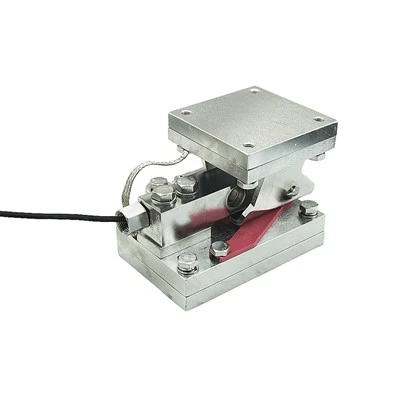
For a lot of folks, especially folks I talk to who’re shopping for sensors, it sounds like a given. But here’s the thing: most of what’s out there on static force is straightforward, but dynamic? That’s where people get tripped up. And since I’m a force sensor supplier who’s been in this game for years—talking to aerospace, robotics, industrial automation, even sports equipment teams—I’ve seen so many folks get this wrong. They grab a sensor labeled “force sensor” and just assume it works for dynamic loads, only to end up with garbage data, blown parts, or a whole project delayed.
First, let’s define what dynamic force even is, because “dynamic” gets thrown around a lot. Static force is constant over time, right? It doesn’t move, doesn’t change—like you pressing a 5lb dumbbell onto a sensor and holding it there for 10 seconds. Dynamic force is all about change: it’s fast, it’s fleeting, it can spike and dip in milliseconds, and the load itself might be accelerating. That hammer strike I mentioned earlier? The contact lasts like 10 microseconds. If your sensor can’t keep up with that, you’re gonna miss the peak force entirely, or get a reading that’s way lower than the actual load.
So, can force sensors measure that? Short answer: yes, but not every sensor. Here’s where most suppliers miss the mark, too. A lot of cheap, off-the-shelf force sensors are built for static use. They have a slow response time—like, they take 100ms or more to settle into a reading. That’s fine for a press brake that holds a load for a second, but useless for a fast impact. For dynamic stuff, you need two key things: high sampling rate and low mechanical inertia.
Sampling rate is how often the sensor takes a reading. If a dynamic event lasts 1ms, you need to sample at, like, 10,000 times per second minimum—even 100,000 is better. Think of it like a camera: if you take a pic at 1 frame per second, you’ll never catch a hummingbird’s wing beat. Same with sensors. If your sampling rate is too low, you’ll either smooth out the peak force (so you think it’s 100N, but it was actually 150N) or miss it entirely.
Mechanical inertia is another big one. Inertia here means how much the sensor itself resists changing its shape when a dynamic load hits it. Static sensors use thick, rigid components to stay stable under steady loads—but that makes them heavy and slow. Dynamic sensors, on the other hand, have thinner flex elements or even piezoelectric material, which can react super fast. Wait, piezoelectric—let’s get into that. Piezo sensors are the go-to for dynamic force because they generate a charge when force is applied, and that charge changes instantly with the load. But here’s a catch: piezo sensors can’t measure static force long-term, because the charge leaks over time. That’s not a bug, it’s a feature for dynamic use. If you need both static and dynamic, you have to pick a piezoresistive sensor with a super fast response—like ones with MEMS technology. Those can sample at millions of times per second, no leaky charge issue, but they’re not cheap, and you still have to make sure the signal conditioning is right.
I’ve seen so many horror stories from clients who skipped this. Last year, a robotics team came to me with a problem: their robotic gripper was supposed to sort soft fruit, but it kept squeezing too hard and bruining the apples. They’d bought a $20 generic force sensor that worked for static tests, but when the gripper was moving fast (dynamic, obviously), the sensor lagged so bad it didn’t register the soft fruit until it was already crushed. They tried adjusting the pressure settings, but since the data was wrong, nothing worked. We swapped in a dynamic force sensor we supply—one that samples at 50,000Hz—and suddenly they had accurate data. The gripper adjusted its force in 2ms, no more bruised apples. That’s the difference.
Another example: aerospace. When a plane lands, the landing gear takes a huge dynamic load—way more than the static weight of the plane. If they use the wrong sensor, they’ll calculate the wrong stress on the gear, which is a safety hazard. I worked with an aerospace test lab a few years back; they were using old strain gage sensors that took 200ms to respond. Their landing gear test data was off by 30%, so they were overbuilding parts to be safe, which added unnecessary weight to the plane. Swapping to our dynamic force sensors cut the error to under 2%, and they saved millions in fuel costs from the lighter parts.
But wait, it’s not just about the sensor itself. Even if you have a great dynamic sensor, you can mess it up with how you mount it. That’s something a lot of people overlook. If you mount a sensor on a flexible bracket, that will absorb some of the dynamic force, so your reading is wrong. You need a rigid, solid mount—like bolting the sensor directly to a heavy metal plate, no gaps, no flex. Also, for impact tests, you can’t have any other components between the load and the sensor. If you put a rubber pad between the hammer and sensor, that pad will dampen the peak force, so you get a lower reading than actual. That’s a trick question a lot of suppliers don’t tell you—your setup matters as much as the sensor.
And let’s talk about noise. Dynamic force readings are way noisier than static ones, because they’re moving fast. If your sensor can’t filter the noise without losing the real signal, you’ll get random spikes or flat lines that don’t make sense. Good dynamic sensors have built-in signal conditioning that filters out the high-frequency noise from electrical interference, while keeping the actual force signal intact. Cheap sensors skip that, so you end up with a bunch of garbage data.
Wait, are there any myths here? Yeah, one big one: “all force sensors are the same for dynamic use.” No, way. I’ve seen piezo sensors rated for 10,000Hz sampling that still get confused by high-g impacts, because their internal structure isn’t designed for that. Or MEMS sensors that work great up to 100,000Hz, but if you apply a load way over their range, they’ll clip the signal—meaning the peak force is off the chart, and you can’t measure it. Another myth: “higher sampling rate is always better.” Not really, if you don’t need it. If you’re testing a slow impact, like a door closing, 1,000Hz is enough. Wasting money on a 1,000,000Hz sensor for that is overkill.
So, let’s circle back to the original question: can force sensors measure dynamic force? Yeah, but only if you pick the right one, set it up correctly, and know what you’re doing. If you’re working on a project that needs fast, changing loads—automation, robotics, impact testing, sports, aerospace—don’t grab a random sensor off Amazon. Talk to someone who gets dynamic load specifics, not just “we sell force sensors.”
For us, as a force sensor supplier, that’s what we focus on. We don’t just sell sensors—we help clients figure out what they need. If you’re dealing with dynamic force and you’re tired of bad data, blown budgets, or delayed projects, hit us up to chat. We can walk you through what sampling rate, load range, and mounting setup will work for your exact use case, no hard sells, just straight talk.
Force Sensor References
- Fraden, J. (2016). Handbook of Modern Sensors: Physics, Designs, and Applications. Springer.
- ISO 10360-8:2017, Geometrical product specifications (GPS) — Acceptance and reverification tests for coordinate measuring machines (CMM) — Part 8: CMMs with force sensors for contact probing. International Organization for Standardization.
- Ribó, J., & Mañosa, J. (2020). Piezoelectric Sensors for Dynamic Force Measurements: A Review. Sensors and Actuators A: Physical.
- Wang, L., et al. (2019). MEMS Force Sensors for High-Speed Dynamic Load Monitoring. Journal of Microelectromechanical Systems.
Yixing Silvanus Electric Manufacture Co., Ltd.
With abundant experience, we are one of the most professional force sensor manufacturers and suppliers in China. We warmly welcome you to buy bulk advanced force sensor in stock here and get pricelist from our factory. All customized products are with high quality and competitive price.
Address: No.30 Fukang Road, Xinjie Street, Wuxi, Jiangsu, China
E-mail: jacky@silvanus.cn
WebSite: https://www.kunsens.com/
