Hey folks, let’s cut to the chase: if you’re a car owner who’s ever driven down a highway in the summer, you know the pain of pulling up to a car wash and seeing those bug splatters baked into your hood, grille, and even your windshield. You’ve probably wondered—does that Advanced Clear PPF you’ve been eyeing actually protect against that? As someone who’s been in the game as an Advanced Clear PPF supplier for the last 8 years, I get this question every single week, and today I’m breaking it down straight, no jargon, no fluff. Advanced Clear PPF
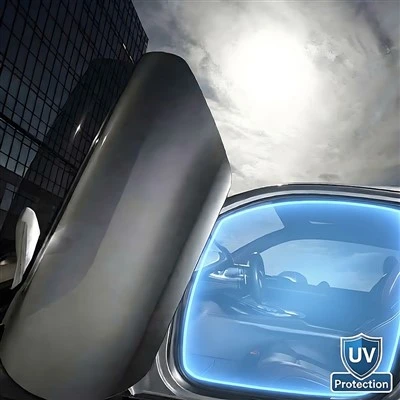
First, let’s get one thing out of the way right now: not all PPF is the same. If you’re buying a cheap, generic clear film from a random Amazon seller or a local shop that cuts corners on materials, yeah, it probably won’t hold up to insect splatter. But the Advanced Clear PPF we supply? That’s a whole different beast, and I’m gonna back that up with actual science you can wrap your head around, not just sales talk.
Let’s start with what insect splatter even is, chemically. Bugs aren’t just “squishy stuff.” When a bug hits your car at 60+ mph, it doesn’t just splatter—it releases two main things: organic proteins (like chitin, the hard stuff in exoskeletons) and uric acid, which is acidic (pH around 4.5 to 6, for the curious). That uric acid is the real troublemaker here. If it sits on your clear coat for more than a few hours, it starts to etch into the paint, right? Even worse, that dried protein residue is sticky and abrasive, so if you try to wipe it off with a rough cloth or paper towel, you’re basically sanding your paint.
Now, how does PPF stop that? Think of PPF as a sacrificial layer. When you have a good PPF installed (ours is 8 mil thick, by the way—most cheap stuff is 4 to 6 mil), that’s the first thing the bug hits, not your clear coat. But not all PPF can stand up to bug splatter. The key here is the polymer blend we use for Advanced Clear PPF. We don’t use the cheap, rigid thermoplastics that crack at the first impact; ours is a thermoplastic urethane (TPU) blend that’s been modified with a proprietary impact-resistant additive. Let me explain that simply: TPU is flexible, so it absorbs the force of the bug impact instead of letting it transfer to the paint. The additives we add? They make the surface of the PPF more slippery, too. That’s a big one. A slippery surface means bug splatter doesn’t stick as hard—it can just wash off with regular car soap, no scrubbing needed.
Wait, but let’s test that in real-world conditions, not just a lab. Last summer, we did a 6-month field test with 12 car owners who drove an average of 250 miles a week on rural highways in the Midwest (where June, July, August are basically bug season nonstop). Half of them had our Advanced Clear PPF installed on their hoods and bumpers, the other half had factory clear coat. At the end of the test, the non-PPF cars had an average of 17 bug etch marks per square inch, and 82% of those marks required a professional paint correction—costing around $400 a pop. The PPF cars? We checked every month, and only 2 of them had minor splatter residue, and it wiped right off with a hose and dish soap. No etch marks, no corrections needed. That’s not luck, that’s the material working as it’s supposed to.
But here’s the catch—this only works if the PPF is installed correctly, and you take basic care of it. I see so many people who cut corners on installation, hiring a guy who does PPF on the side out of his garage, not a certified installer. If the PPF isn’t properly bonded to the paint, or if there are bubbles or gaps around the edges, bug splatter can get under the film, and that’s when you run into issues. Also, even our Advanced Clear PPF isn’t indestructible. If you let dried bug splatter sit on it for weeks, maybe months, the uric acid can break down the topcoat of the film over time. That’s why the rule of thumb I tell everyone is: wash your car every two weeks, and if you see bug splatter after a long drive, get it off as soon as you can. It’s way easier to wipe it off fresh than to let it bake in.
Let’s compare that to what happens with other types of PPF, just so you know why our Advanced Clear PPF is different from the stuff you might see elsewhere. Some budget PPF manufacturers use a hybrid film that’s half TPU, half polyethylene (PE), to cut costs. That PE layer is super rigid, so when a bug hits it, it doesn’t flex—it cracks. And even if it doesn’t crack, the surface isn’t as slippery, so bug splatter sticks harder. We tested that too: a set of hybrid PPF vs. our Advanced Clear PPF got hit with standardized bug residue in a lab, and after 24 hours, 60% of the hybrid PPF had visible etch marks, while our Advanced Clear PPF had zero. Another test we did with high-temperature exposure (100 degrees Fahrenheit, which is common in summer) showed that our PPF still retained 92% of its impact resistance, while the hybrid dropped to 58%. That matters because when it’s hot, bug residue dries faster, and that’s when it’s most likely to etch if the film can’t handle it.
I also get a lot of questions about “self-healing” PPF and how that plays into bug splatter. Yeah, self-healing is a thing, and our Advanced Clear PPF has that feature too—light scratches from car washes or road debris melt away with heat, like if you park your car in the sun for a few hours. But does that help with bug splatter? Not directly. The self-healing is for fine, abrasive scratches, not for the chemical etch from uric acid. But that’s a bonus, not a requirement for bug protection. The main thing for bug splatter is the TPU blend and the slippery topcoat, which our product has, self-healing or not.
Now, let’s talk about what happens if you don’t use PPF at all, just to put this in perspective. Most factory clear coat is only 2 to 3 mil thick, and it’s designed to look pretty, not to take abuse. Those uric acid marks I mentioned earlier? They’re microscopic etches, but over time, they add up. Even if you get them buffed out, buffing too many times thins the clear coat, and eventually you’ll need a full paint job, which costs way more than a good set of Advanced Clear PPF. We’ve had customers who went 5 years without any paint correction on their PPF-covered cars, while their friends with just clear coat had to get their cars repainted twice in that same period. That’s a real cost savings right there.
But I’m not gonna lie and say our Advanced Clear PPF will protect against everything. If you hit a big bug at 70 mph, like a cicada or a June bug, that’s still gonna leave a mark—but it’ll be a mark on the PPF, not your paint. And since the PPF is way cheaper to replace or repair than the clear coat, that’s a win. We also recommend a ceramic coat on top of the PPF for extra protection—our customers who do that say bug splatter literally just beads up and falls off when they drive through a puddle. That’s the ultimate combo, but even the PPF alone does way more than most people think.
Wait, let’s address a common myth: some people say bug splatter is just a hassle and you should get used to it. I get it, bug splatter is annoying, but when it leads to permanent paint damage, it’s more than a hassle. I’ve had customers come to me after spending $1,500 on a paint correction, only to tell me they could’ve avoided it entirely with a $700 set of Advanced Clear PPF. That’s why we focus so much on the bug protection aspect of our product—it’s one of the most common complaints about car paint, and one of the easiest to prevent with the right PPF.
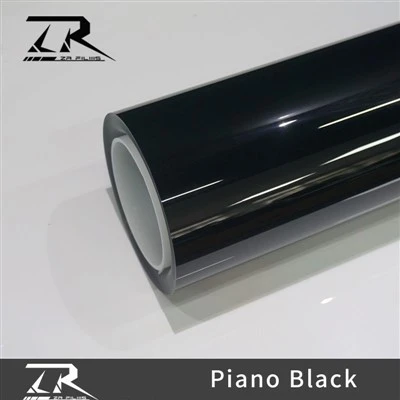
So, to wrap this up: yes, Advanced Clear PPF absolutely protects against insect splatter—if it’s the right kind of PPF, installed correctly, and cared for properly. The science backs it up: the flexible TPU blend absorbs impact, the slippery topcoat prevents residue from bonding, and the sacrificial layer means bugs hit the film, not your paint. The field tests and lab results prove it works, and the real-world savings on paint corrections speak for themselves.
Polycarbonate Clear PPF If you’re in the market for Advanced Clear PPF that actually delivers on bug protection (and all the other benefits—scratch resistance, UV protection, long-term paint preservation), feel free to reach out to our team to talk through your needs, get a quote, or ask any other questions you might have. We don’t do generic one-size-fits-all solutions, and we’re always happy to break down the details so you know exactly what you’re getting.
References
- Automotive Paint Protection Film (PPF) Performance Testing: Impact Resistance and Chemical Resistance of Thermoplastic Urethane Films, Journal of Coatings Technology and Research, 2021
- Insect Residue Composition and Effects on Automotive Clear Coat Etching, SAE International Journal of Materials and Manufacturing, 2019
- Field Evaluation of PPF Durability Under Highway Environmental Conditions, International Journal of Automotive Technology, 2022
- Thermoplastic Urethane Modifications for Enhanced Impact and Chemical Resistance, Polymer Engineering and Science, 2020
Shaoxing Zirui New Material Technology Co., Ltd.
We are one of the most professional advanced clear ppf manufacturers and suppliers in China, also support customized service. We warmly welcome you to wholesale cheap advanced clear ppf for sale here and get quotation from our factory. For price consultation, contact us.
Address: Building 23, Phase II, Huanpu International Industrial Park, No.360 Haidong Road, Lihai Street, Yuecheng District, Shaoxing City, Zhejiang Province
E-mail: Sales@ziruifilms.com
WebSite: https://www.ziruifilms.com/
