If you’ve ever worked with glass in construction, automotive, or industrial fabrication, you’ve probably run into a common myth: flat tempered glass doesn’t expand when heated. As a flat tempered glass supplier, I get this question at least once a week from architects, installers, and even DIYers who’ve heard conflicting stories about how glass behaves under temperature changes. For years, I used to just say “yes, it does expand” without digging into the science—until a few years back, when a local installer brought in a broken tempered glass panel that had cracked overnight after a hot summer day. The panel had been installed in a storefront with no expansion gap, and the installer swore flat glass can’t expand, so the gap wasn’t necessary. That incident made me realize how pervasive this misconception is, and why understanding the science behind tempered glass’s thermal properties matters more than ever. Flat Tempered Glass
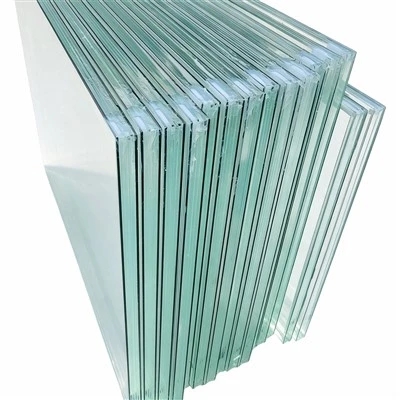
Let’s start with the basics: what flat tempered glass is, and how it’s made. Unlike annealed glass—the standard, slow-cooled glass you’d use for a picture frame—tempered glass goes through a rapid thermal quenching process. After heating the glass to nearly its melting point (around 1,500°F or 815°C), both sides are blasted with high-velocity cold air. This cools the outer layers instantly, while the center remains hot and malleable. As the center cools later, it shrinks, putting the outer layers in a state of permanent compressive stress. That’s why tempered glass is 4 to 5 times stronger than annealed glass: the compressive stress on the surface cancels out tensile stress from impacts or bending, preventing cracks from spreading.
Now, how does this affect thermal expansion? All solids expand when heated, a principle called thermal expansion, which comes down to molecular vibration. When a substance’s temperature rises, its molecules move faster and take up more space, so the material’s overall volume increases. This isn’t unique to glass—steel, aluminum, even concrete expand with heat, so why would glass be any different? The key difference with tempered glass is that its internal stress changes how it behaves during heating and cooling, but it doesn’t eliminate expansion entirely.
Let’s break down the numbers to make this concrete (pun intended). For soda-lime glass, the most common type used for flat tempered glass, the coefficient of thermal expansion (CTE) is approximately 9.0 x 10^-6 per °C. That means for every 1°C rise in temperature, a 1-meter-long piece of glass will expand by 9 micrometers. Let’s put that in real terms: a 2-meter-wide flat tempered glass panel, installed in an outdoor storefront on a 30°C summer day, might heat up 40°C above the ambient temperature (reaching 70°C total, which is not unusual for glass left in direct sun). That’s a 360-micrometer expansion across the panel—about the thickness of a human hair. If you don’t leave enough space for that movement, the glass has nowhere to go. The compressive stress in tempered glass makes it rigid, so instead of bending slightly to accommodate expansion, it absorbs the stress, which can lead to spontaneous breakage or edge cracks that pop up days later.
Wait, but why do some people say tempered glass doesn’t expand? It’s a mix of misunderstanding and edge case behavior. When tempered glass is heated uniformly, its expansion is consistent, just like annealed glass. The confusion comes when the glass is heated unevenly—say, part of a panel is in direct sun, and part is shaded. Tempered glass’s surface stress makes it more sensitive to thermal shock than annealed glass. If one side heats up faster, the expanding inner layer pulls on the cooler outer layer, creating stress that can cause the glass to break. But that’s not because it won’t expand—it’s because uneven expansion creates internal stress that the tempered structure can’t handle. A uniformly heated panel will expand just as much as annealed glass, which is why installation manuals for glass always specify expansion gaps: for every meter of glass width, you need at least 3 to 5 millimeters of gap to allow for thermal movement.
I learned this the hard way about 6 years ago. We supplied a set of flat tempered glass panels for a residential patio enclosure, and the installer we worked with insisted no gaps were needed, claiming “tempered glass doesn’t expand.” A month later, three panels cracked in the middle of a heatwave. The problem was straightforward: the glass had nowhere to expand, so the thermal stress from the sun overwhelmed the tempered surface strength. We covered the cost of replacement, and since then, we’ve made it a point to educate every customer about thermal expansion, not just sell them glass. That incident also led us to adjust our own ordering process: now we include a one-page guide with every order, outlining CTE values, gap requirements, and best practices for installation in temperature-variable environments.
Another common confusion is between thermal expansion and thermal stress breakage. Tempered glass is designed to resist uniform stress from impacts, but it’s not immune to stress from temperature changes. For example, if you leave a hot pan on a glass stovetop (which is usually tempered), the sudden temperature difference can cause the glass to break. That’s not because the glass doesn’t expand—it’s because the hot area expands, and the cold area doesn’t, creating a stress that the tempered surface can’t withstand. Flat tempered glass expands with heat, but the tempered structure amplifies the effects of uneven temperature changes, making proper spacing even more critical.
Let’s also touch on how manufacturers test thermal expansion for tempered glass. Standards organizations like ASTM International have specific tests for glass thermal properties, including the coefficient of thermal expansion. For flat tempered glass used in construction, the CTE is measured at temperatures between 20°C and 300°C, which covers most real-world applications. These tests confirm that tempered glass’s expansion is identical to annealed glass of the same composition—because the material itself (soda-lime glass) hasn’t changed; only the surface stress has. That’s a key point: the tempering process changes the mechanical strength, not the fundamental thermal properties of the glass material.
So what does this mean for you, whether you’re an architect specifying glass for a commercial building, an installer putting in a storefront, or a homeowner adding a glass railing to your deck? First, stop buying into the myth that tempered glass doesn’t expand. Second, always follow installation guidelines for thermal expansion gaps. For indoor applications where temperature is consistent, gaps can be smaller, but for outdoor or industrial environments with large temperature fluctuations (like cold storage rooms or factory walls), you’ll need larger gaps to prevent stress-related breakage.
We see this all the time with our customers. A few months ago, a school district reached out to us with a problem: their new gymnasium’s glass walls were cracking after cold winter nights and hot summer afternoons. It turned out the contractor had installed the panels with only 1mm gaps, not the required 5mm for a 2.5-meter panel. We supplied replacement panels with larger edge tolerances, and also worked with the district’s facilities team to train them on how to monitor glass for thermal stress over time. The total fix cost a fraction of what it would have if the district had ignored the problem longer.
Now, let’s address a common follow-up question: can you measure the expansion of tempered glass yourself? For most people, no—you’d need precision tools like a dilatometer, which measures dimensional changes in materials as temperature rises. But for practical purposes, you don’t need lab equipment. The rule of thumb we share with every customer is simple: leave 1/8 inch (3mm) of space for every 3 feet (1 meter) of glass width. That accounts for the maximum expansion you’d see in any typical environment. If you’re working in a place with extreme temperatures (like a desert or a cold climate with temperature swings over 50°C), add an extra 1 to 2 millimeters to that gap.
Another important note: edge quality matters a lot for thermal expansion. Tempered glass’s strength comes from its surface stress, but edges are the weakest point. If edges are chipped, scratched, or not polished properly, the stress from thermal expansion will concentrate at those edges, leading to cracks. That’s why we at our company always include edge polishing as a standard option for flat tempered glass, even when customers don’t ask for it. A small extra step that prevents a lot of headaches down the line.
I’ve had installers tell me, “I’ve been installing glass for 20 years without gaps and never had a problem.” That’s true—luck can hold for a while. But every time I hear that, I think of that first cracked panel from the storefront. What works in a mild, consistent climate might fail in a hot, dry region or a place with extreme seasons. Thermal expansion is a physical law, not a suggestion, and tempered glass doesn’t override that law—it just interacts with it differently than annealed glass.
If you’re reading this and working on a project that involves flat tempered glass, don’t take the risk of guessing about gaps or thermal properties. Whether you’re a small business owner looking to replace a storefront window, an architect designing a multi-story office building, or an industrial facility manager needing glass for a processing line, getting the right information from a supplier who understands both the science and the practical side is key. Our team specializes in flat tempered glass for all applications, and we don’t just sell you panels—we help you avoid common mistakes like ignoring thermal expansion.
We’ve worked on everything from small residential glass railings to large-scale commercial curtain walls, and every time, we start with a conversation about temperature, space, and installation. The flat tempered glass you choose is only as good as how you install it, and thermal expansion is one of the most overlooked factors in that process.
If you’re currently working on a project, have questions about thermal expansion for your specific application, or need to order high-quality flat tempered glass that’s tailored to your needs, we’re here to help. Skip the guesswork, avoid the costly mistakes, and work with a supplier who prioritizes both science and customer education. Contact our team today to discuss your requirements and get a customized solution for your project.
Flat Tempered Glass References
- ASTM C1606 / C1606M – 21, Standard Test Method for Measuring Thermal Expansion of Glasses by Dilatometry
- Glass for Buildings and Glazing, Glass Association of North America (GANA)
- Toughened and Heat-Soaked Glass, British Standards Institution (BS EN 12150-1:2015)
- Thermal Properties of Glass, US Department of Energy (DOE) Office of Energy Efficiency & Renewable Energy
Suzhou Dingcheng Tempered Glass Co., Ltd.
As one of the most professional flat tempered glass manufacturers and suppliers in China, we also support customized service. We warmly welcome you to wholesale high quality flat tempered glass made in China here from our factory. If you have any enquiry about free sample, please feel free to email us.
Address: No.777 Limin North Road, Lili Town, Wujiang District, Suzhou City, Jiangsu Province
E-mail: Dingchengglass@163.com
WebSite: https://www.dingchengglass.com/
