Hey there, if you’re deep in the business of t-shirts, apparel, or even promotional swag, you’ve probably stared at your workshop floor and thought, “Where on earth am I gonna fit this automatic screen printing press?” As someone who’s been selling automatic screen printing presses for over a decade—shoutout to all the late-night calls I’ve fielded from shop owners panicking about their layout—I get this question more than any other. It’s not just about shoving a big machine into a corner; skimping on space here can lead to jammed jobs, safety hazards, and a team that’s way too stressed to hit those production deadlines. Let’s break this down like we’re geeking out over a new press we just unboxed, no boring jargon allowed. Automatic Screen Printing Press
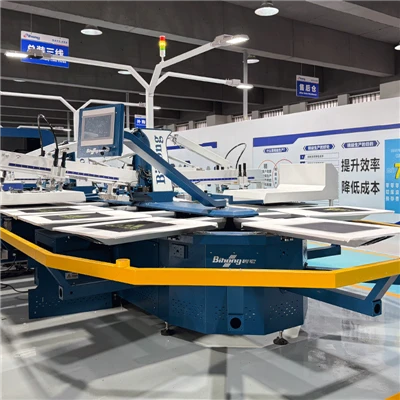
First off, let’s talk basics. Not all automatic presses are created equal—some are compact 6-starter units for small shops, others are monster 24-color, 20-station workhorses for big brands. But there’s a universal rule: you don’t just measure the machine itself, you measure the space around it. Think of it like parking a semi-truck—you need room to open doors, unload pallets, and maneuver tools without scraping anything. Most new press owners only account for the footprint, but the real culprits are the clearance zones.
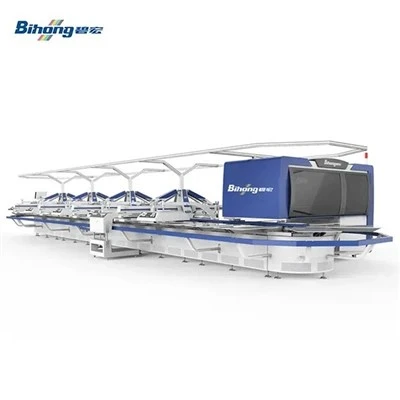
Let’s start with the press’s core footprint. The measurement here is length and width of the main machine body. For example, a standard 8-color, 8-station automatic press I sell has a footprint of roughly 8 feet long and 4 feet wide. But wait—those numbers don’t include the conveyor belt, right? The conveyor that carries shirts into the press and out the other end adds another 6 to 10 feet total, depending on if you want single-pass or dual-pass (dual-pass is way better for high volume, by the way—no more waiting for one job to finish before starting the next). So suddenly, that 8×4 press becomes a 14 to 18-foot long setup. That’s a big difference, and I’ve had shop owners act like I swindled them when they realize their 12-foot wide workshop can’t fit a 15-foot conveyor.
Next, the clearance zones—this is where people mess up. On every side of the press, you need at least 3 feet of open space. Why? Let’s go through each side: the operator side is where you load screens, adjust registration, and fix any mistakes. If you’re crammed in with 1 foot of space, you’ll be knocking over ink bottles, tripping over stools, and fighting to reach the press controls. The output side (where shirts come off the conveyor) needs 3 feet to stack finished orders—no one wants to pile 500 shirts on the floor because there’s nowhere to set them. The back of the press is for ink mixing, waste bins, and power connections—cramping that side means spilled ink on electrical wires, and that’s a fire hazard, not to mention a nightmare to clean. The front? Wait, sometimes you need a little extra space for a pallets jack if you’re moving raw blanks in bulk.
Now, let’s factor in add-ons, because no one runs an automatic press solo these days. If you’re running flash dryers (you should—they prevent ink bleeding), each flash dryer adds 2 feet of space on the conveyor. A standard press might have 2 to 3 flash dryers, so that’s another 4 to 6 feet added to your layout. Then there’s the washout station—you need a dedicated spot to clean screens, which is usually 3 feet by 4 feet right next to the press (ink fumes are no joke, don’t put that anywhere near the main production line). And if you’re using a dryer tunnel (for curing prints fast), that’s 10 to 15 feet of space. I once had a customer try to fit a 12-color press with a small tunnel in a 20×20 room—they spent the first month tripping over the tunnel and leaving half-cured shirts everywhere, until they rearranged and added 5 feet to the back.
Wait, what about ceiling height? A lot of people forget this. Automatic presses spin the platen (the thing that holds the shirt) around, and the screen arms hang down over the platen. If your ceiling is under 10 feet, you might have clearance issues, especially if you’re using thicker blanks like hoodies or crewnecks. Some of the larger presses I sell have screen arms that extend 2 feet above the platen, so if your ceiling is only 9 feet, you’re gonna be hitting screens every time you spin, and that’ll mess up your registration. I always recommend at least 10 feet of clearance from the floor to the ceiling, and if you’re running hoodies, bump that to 11 feet.
Now, let’s get real with shop size examples. Let’s say you’re a new shop with a 10×15 room (small, but manageable). What can you fit here? A compact 6-color, 6-station press, no conveyor, maybe one small flash dryer. That’ll do smaller runs, custom one-offs, but you can’t do bulk orders. If you have a 15×20 room, you can fit an 8-color, 8-station press with a short conveyor, two flash dryers, and a small washout station—perfect for a shop doing 50 to 100 shirts a day. For a big shop doing 500+ shirts a day? You’re looking at a 20×30 room minimum, with space for a full conveyor system, multiple flash dryers, a larger tunnel, and even a quality check spot. I’ve had a customer with a 25×40 room upgrade from an 8-color to a 16-color press, and they had to add 6 feet to the length by moving their storage shelves—worth it, though, because they doubled their order volume.
Here’s a pro tip no one tells you: don’t forget aisle space. Even if you have the perfect press layout, you need at least 3 feet between the press and any other equipment, like storage racks or heat presses. Why? Because if you have a jam, you need to be able to yank the platen out and fix it without knocking over a stack of blank tees. I’ve seen shops that skimped on aisles, and when a press jammed at 4 PM on a Friday, they couldn’t get to it in time to fix it, meaning they missed a $2,000 order. That’s a costly mistake.
Also, think about future growth. If you’re a new shop, don’t buy the smallest press just because it fits your current space—leave room to add another station or a second press in a year. I had a customer who bought a 6-color press for his 10×15 room, and 6 months later he was turning away orders because he couldn’t keep up. He ended up moving to a 15×20 room, but if he’d bought an 8-color press and left 2 feet of extra space, he could’ve upgraded on the same floor plan. Trust me, growth happens faster than you think.
Wait, what about electrical needs? That’s not space, but it ties into layout. Automatic presses need a lot of power—most need a 220V outlet, not the standard 110V. If your workshop only has 110V outlets, you’ll need to hire an electrician to install 220V, and that requires space for the wiring panels. I always tell customers to factor that in when measuring—don’t wait until the press is delivered and you realize there’s nowhere to plug it in.
Let’s talk common mistakes I see all the time. First, people measure the machine’s length, not the conveyor. Like I said earlier, that’s a big one. Second, cramming the washout station next to the main press—ink fumes can make operators sick, plus cleaning screens near a running press means ink spills on production floors. Third, forgetting ceiling height for larger screen arms. I had a customer with a 9-foot ceiling try to run a 12-color press, and every time they spun a hoodie platen, the screen hit the hood and smudged the print. They had to lower the screen arms, which messed up the alignment, so they ended up replacing the press’s screen brackets. Useless cost that could’ve been avoided with a quick ceiling check.
If you’re still stumped on how much space you need, here’s a quick checklist I give all my customers:
- Measure the press’s footprint (length x width, main body).
- Add 6 to 10 feet for conveyor system (more for dual-pass).
- Add 3 feet of clearance on every side of the press.
- Add 2 feet per flash dryer (most shops have 2-3).
- Add 3×4 feet for washout station.
- Add 3 feet of aisle space between all equipment.
- Confirm ceiling height is at least 10 feet (11 for hoodies).
Let’s do a quick example using this checklist. For an 8-color, 8-station press:
- Main body: 8ft x 4ft.
- Conveyor: 8ft.
- Clearance: 3ft on each side = total 6ft added to length, 6ft to width.
- Flash dryers: 2 = 4ft.
- Washout station: 3x4ft (adds 4ft to length).
Total space needed: (8 + 6 + 4)ft length x (4 + 6)ft width = 18ft x 10ft. That’s a 180-square-foot setup, and that’s for a solid small-batch operation. For a 16-color press, double that—300+ square feet, easy.
At the end of the day, the right amount of space isn’t just about fitting a machine—it’s about keeping your team safe, hitting deadlines, and making money. I’ve seen shops with too little space struggle to the point of closing, and shops with just enough (or a little extra) grow into big brands. If you’re eyeing an automatic press but not sure if your workshop can pull it off, don’t guess. Reach out, send me your workshop measurements, and I’ll walk you through the exact layout that works for your needs. No sales pitch, no pressure—just a guy who’s been in this game long enough to know that a little planning saves you a lot of headaches later.
Tunnel Dryer References:
- Printwear and Promotion. (2022). "Layout Planning for Automatic Screen Printing Presses: Space Requirements and Operational Efficiency." Industry Technical Report.
- Specialty Graphic Imaging Association (SGIA). (2021). "Workshop Design Guidelines for Screen Printing Operations." Safety and Production Standards Manual.
- International Association of Screen Printers (IASP). (2023). "Space Optimization for Small to Mid-Size Printing Shops." Practical Operations Guide.
Guangdong Aces Machinery Co., Ltd.
Guangdong Aces Machinery Co., Ltd. is one of the most professional automatic screen printing press manufacturers and suppliers in China. We are committed to providing high quality equipment made in China with low price. If you’re going to buy durable automatic screen printing press, welcome to get pricelist from our factory. Customized orders are welcome.
Address: 701, Building 5, Liandong U Valley, No.8 Zhixin 1st Road, Dagang Town, Nansha District, Guangzhou City, Guangdong Province, China.
E-mail: jessie@bhprinter.com
WebSite: https://www.bihongprinter.com/
