When I first started working in the outdoor lighting industry over a decade ago, I used to get a lot of confused questions from potential customers, contractors, and even local officials. “High mast light?” they’d say, squinting like I’d just mentioned some kind of mythical structure. “Isn’t that just a really tall street light?” Back then, I’d launch into a quick explanation, but I’ve learned over the years that there’s a lot more to high mast lights than just height—especially for the people who rely on them to keep public spaces safe, efficient, and functional. As a supplier who’s worked with these systems day in and day out, I want to break down what a high mast light actually is, why it matters, and how they’ve become one of the most critical pieces of infrastructure for large outdoor areas. High Mast Light
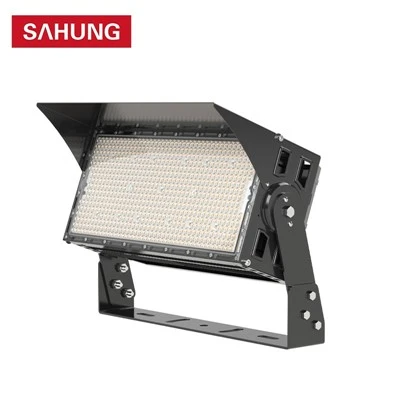
First, let’s get the basic definition straight. A high mast light is a tall lighting system—usually between 20 and 50 meters, or about 65 to 165 feet tall—consisting of a central pole, a metal framework at the top that holds multiple high-intensity light fixtures, and often a motorized winch system to lower the head for maintenance. Unlike standard street lights, which typically stand 8 to 12 meters tall and have just one or two bulbs to light narrow roads, high masts are built to cover massive, open spaces without the need for dozens of smaller, scattered lights. Think about a highway interchange, a sports stadium parking lot, a port container yard, or an airport tarmac—those are the spots where a single high mast can light an area the size of several football fields.
But why did we even start using these instead of more traditional lighting? Before high masts became common, lighting large open spaces required installing dozens of light poles spread across the area, each with their own wiring, transformers, and maintenance needs. Not only was that more expensive upfront, but it was also less efficient—those smaller lights would create dark spots between them, and their scattered design meant higher energy use and more frequent repairs. Back in the 1960s and 1970s, as infrastructure expanded, ports grew larger, highways started crossing entire regions, and stadiums began hosting night events that drew tens of thousands of people, engineers needed a way to light these big spaces more effectively. That’s when high mast lighting was introduced, and it’s been a game-changer ever since.
Let’s break down the key components of a high mast light system to give you a clearer picture. First, the pole itself: it’s not just a long steel tube. Most high mast poles are made of galvanized steel to resist rust and corrosion, especially since many are installed in coastal areas or near industrial sites where salt or harsh chemicals can eat away at metal. The poles are also tapered, meaning they’re wider at the base than at the top, to provide extra stability against high winds—critical for systems that tower so far above the ground. At the base, you’ll usually find a control panel, electrical connections, and sometimes a storage area for tools or spare parts. The winch system is another essential part; because the light head is heavy (often hundreds of pounds, with 8 to 16 bulbs), you can’t climb a 50-meter pole every time a bulb burns out. The winch lets you lower the entire head to ground level safely, so maintenance crews can swap bulbs, clean fixtures, or make adjustments without risking a fall or using expensive aerial lift equipment.
The light fixtures themselves are where the technology has come a long way in the last decade. Early high masts used high-pressure sodium (HPS) bulbs, which are known for their warm yellow light but are less energy-efficient and take time to reach full brightness. Today, most high mast lights use LED (light-emitting diode) fixtures, and for good reason. LEDs use up to 75% less energy than HPS bulbs, last 25 times longer, and produce a whiter, more uniform light that reduces glare. Glare was a big problem with old high masts—people driving or working below would get blinded by harsh light, and the uneven distribution meant some areas were too bright while others were too dark. Modern LED high mast systems come with precision optics that direct light exactly where it’s needed, cutting down on waste and improving safety. Some newer systems even have smart controls: motion sensors, dimmers that adjust brightness based on how many people are in the area, and remote monitoring that alerts you when a bulb is out, so you can address issues before they become a safety hazard.
Now, where are high mast lights used? That’s the part that surprises a lot of people, because they’re far more versatile than just stadiums. Let’s go through the most common applications:
First, transportation hubs. Highway interchanges, rest areas, and rest stops—high masts here eliminate dark spots where accidents can happen, especially in rural areas where there’s no other lighting. Ports and container yards are another big one: these areas have huge stacks of shipping containers, and workers need to see clearly to move cargo, unload ships, and operate forklifts. A single high mast can cover an entire 100-acre container yard, making it safer for night shifts and reducing the risk of mistakes. Airports are also major users: tarmacs, parking lots, and even runway edges sometimes use high masts to light large open areas, since running dozens of small lights across a runway would be impractical and costly.
Then there’s commercial and industrial sites. Mining operations, construction sites, solar farm installations, and large warehouse parking lots all rely on high masts. Mining sites, especially open-pit mines, stretch across miles of land, and night shifts are critical for meeting production goals. High masts let workers operate machinery safely, avoid obstacles, and prevent accidents that could lead to injuries or lost revenue. For retail chains with big-box stores and large parking lots, high masts are a cost-effective way to light thousands of parking spaces, reducing theft and making customers feel safe when they walk to their cars at night.
Sports and recreational areas are another key sector. Professional stadiums, college athletic fields, and even local soccer complexes use high masts for night games. The goal here is to provide enough light for players and referees to see the ball clearly, and for broadcast cameras to capture high-quality footage without glare that would ruin the shot. We’ve installed high masts for several local high school sports complexes in my area, and the difference is night and day—before, teams had to end games early if it got too dark, now they can hold full tournaments and practice after work.
What are the benefits of high mast lights compared to other lighting options? Let’s list them out, because this is what matters most to anyone considering upgrading their lighting. First, cost efficiency. Even though a single high mast has a higher upfront cost than a standard street light, you need far fewer of them to cover the same area. That means less wiring, fewer transformers, and lower installation costs. Add to that the energy savings from LED fixtures and the long lifespan of LEDs, and you end up with lower monthly utility bills and less money spent on maintenance over the life of the system.
Safety is another huge benefit. Uniform, high-quality light reduces accidents—whether that’s a car crashing in a dark interchange, a worker tripping over a container in a port yard, or a customer being targeted in a dim parking lot. High masts also reduce light pollution, which is a big concern now. Modern LED systems are directional, so light doesn’t spill upward into the sky or into nearby residential areas, which means less disruption to people’s sleep and less impact on wildlife. Older lighting systems used to flood the sky with light, making it hard to see stars and confusing nocturnal animals, but modern high masts fix that.
Flexibility is also a plus. If your needs change, you can adjust the height of the mast (within reason) or add more fixtures as your space grows. Smart controls mean you can tailor the lighting to different times of day or events—like dimming lights in a parking lot when it’s empty, or boosting brightness during a night game.
Of course, high masts aren’t for every situation. If you have a small parking lot for a neighborhood store, a standard street light is more than enough and will cost less. High masts are designed for large, open spaces, so if your area is tight or has a lot of obstructions, they might not be the right fit. But for anyone managing a space that spans multiple acres, they’re often the best option.
Over the years, I’ve worked on every kind of high mast project, from a small community sports field with two masts to a major port that needed 20 masts to cover their entire yard. One project I still remember was a regional airport that was expanding their tarmac and needed to replace old, HPS-based high masts that were using too much energy. We worked with their engineers to design a system with 12 LED fixtures per mast, smart dimmers, and remote monitoring, and they ended up cutting their lighting energy use by 65% while improving safety for their ground crews. That’s the kind of impact these systems can have.
As a supplier, I’ve seen firsthand how a good high mast system can transform a space. The right system isn’t just a pole with lights—it’s an investment in safety, efficiency, and functionality. If you’re thinking about upgrading your outdoor lighting, whether it’s for a port, a stadium, a parking lot, or any large open space, the first step is to work with a team that understands the ins and outs of high mast design, installation, and maintenance. We’ve helped hundreds of customers find the right solution for their needs, and we’re here to walk you through every step, from choosing the right pole height to picking the right fixtures and controls.

If you’re ready to learn more about how high mast lights can improve your space, or if you have questions about sizing, installation, or smart controls, don’t hesitate to reach out for a conversation. We can discuss your specific needs, share case studies from similar projects, and help you put together a system that fits your budget and goals.
LED Street Light References
- International Association of Lighting Designers. (2022). Outdoor Lighting Guidelines for Large Open Spaces.
- U.S. Department of Energy. (2021). LED Lighting Technology for Outdoor Infrastructure.
- National Cooperative Highway Research Program. (2019). High Mast Lighting for Highway Interchanges: Best Practices.
- Port Equipment Manufacturers Association. (2020). Lighting Solutions for Modern Port Yards.
Hangzhou Shanghong Electronic Technology Co., Ltd.
We are one of the most experienced high mast light manufacturers and suppliers in China. With a professional production team, we offer a wide range of products with superior quality. Please feel free to wholesale custom made high mast light from our factory.
Address: 5F, Building A, No.7 Xiyuan 2nd Road, Xihu District, Hangzhou City, Zhejiang, China.
E-mail: sales3@sahung.com
WebSite: https://www.sahung-light.com/
