If you’ve ever worked in the semiconductor industry, you know even tiny fluctuations in humidity can derail a months-long fabrication process. That’s why semiconductor dehumidifiers aren’t just “nice-to-have” equipment—they’re mission-critical. As a supplier who’s walked shop floors, listened to plant managers pull late nights troubleshooting humidity spikes, and fielded calls about failed units mid-production, one question comes up more than any other: How long do these dehumidifiers actually last? Semiconductor Dehumidifier
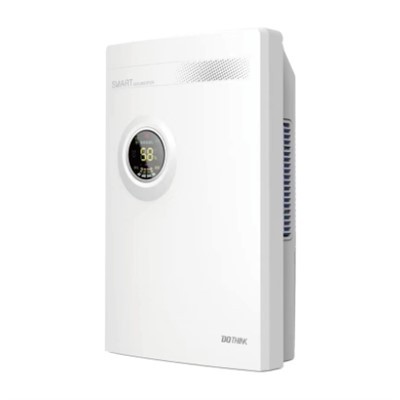
I get it. When you’re investing in capital equipment that costs tens of thousands of dollars upfront, you want to know it will hold up. You don’t want to replace gear every two years, or risk a sudden breakdown when you’re running a 24/7 wafer fab. The answer isn’t a one-size-fits-all number, though. A semiconductor dehumidifier’s lifespan depends on more than just the model number. It comes down to how it’s designed, how you operate it, and how well you maintain it. Let’s break this down, from the engineering that goes into building these units to the real-world stories I’ve seen on job sites.
First, let’s get clear on what makes a semiconductor dehumidifier different from the home unit in your basement. We don’t deal in basic moisture removal here. Semiconductor facilities need precision: humidity levels have to stay within 0.1% relative humidity (RH) in some cleanrooms, and our units are engineered to hit that target consistently, even in environments where ambient humidity can swing 20% or more. That means their components are built for industrial use, not residential.
Let’s start with the base lifespan you can expect, on average. Over 15 years of supplying and supporting these units, the sweet spot for a well-built, properly maintained semiconductor dehumidifier is 15 to 20 years. Wait, that’s way longer than a consumer dehumidifier, which might last 5 to 10 years on average. The difference is in the build. Industrial dehumidifiers use heavy-duty compressors, stainless steel coils, and corrosion-resistant casings—components that aren’t rated for occasional use, but for continuous, heavy operation. I’ve seen units from reputable brands still running at 22 years old, pulling steady humidity control for a mid-sized wafer fab in Arizona. I’ve also seen units die at 7 years, and that wasn’t because they were bad units—it was because of how they were treated.
Now, why do some units outlast others? The first big factor is design. Not all semiconductor dehumidifiers are created equal. Some are built for 24/7 operation, with redundant parts for key functions like moisture sensors and compressors. Others are scaled-down models marketed for small cleanrooms that still work, but their components are rated for lower duty cycles. Let’s be transparent: a unit designed to run 8 hours a day will never last as long as one built for 24/7. That’s a non-negotiable design principle. We engineer our units with that 24/7 duty cycle in mind, testing every compressor and coil to handle thousands of hours of continuous run time before they even leave our warehouse.
The second, most impactful factor is how the unit is used and maintained. This is where I see the biggest gaps—even with the highest-quality gear. Let’s talk about real examples. Last year, I worked with a plant manager in Oregon who had a 12-year-old dehumidifier that was still running perfectly. Their maintenance team did monthly filter checks, cleaned the coils every quarter, and calibrated the RH sensors twice a year. In contrast, a client in Texas had a 5-year-old unit that failed last month. Why? They skipped filter changes for 18 months, let dust and semiconductor process residue build up on the coils, and never calibrated their sensors. The compressor burned out because it had to work 20% harder to move air through clogged parts. That’s a avoidable failure, and it’s way more common than you’d think.
Let’s get specific about components, because that’s where lifespan gets broken down. Every part of a semiconductor dehumidifier has its own life expectancy, and when parts wear faster, the whole unit dies earlier. Compressors are the heart here. Industrial-grade scroll compressors (the type we use) have an average lifespan of 10 to 15 years if maintained properly. But if a filter is clogged, the compressor has to run at higher pressure, which cuts that life down to 7 or 8 years. Coils are next. Stainless steel evaporator and condenser coils are resistant to corrosion from semiconductor gasses and moisture, but if you let residue build up, it eats away at the metal over time. I’ve seen coils fail at 6 years because of unaddressed residue, vs. 18 years on a coil that was cleaned regularly. Sensors, which measure humidity, have a shorter individual life—usually 5 to 8 years—but you can extend that to 10 years with calibration. Fans, another key part, last 12 to 15 years with routine lubrication, vs. 8 years if left unlubricated.
Another often-overlooked factor is environmental conditions. Where is the dehumidifier installed? If it’s in a climate-controlled cleanroom that’s also housing delicate processes, the conditions are relatively mild: temperature stays between 20°C and 25°C, and there’s minimal dust. That’s ideal for longevity. If it’s installed in a utility closet off the fab floor, where temperatures swing 10°C or more daily, or where there’s exposure to corrosive chemicals from wafer processing, that takes a toll. A unit in a hot, humid region like Florida will also work harder than one in a dry climate, shortening its lifespan by 2 to 3 years on average. I have a client in Singapore whose dehumidifiers run 10% more hours a day than units in our South Carolina facility, and they replace their compressors 3 years earlier, even with the same model.
Now, let’s talk about what happens when a unit reaches the end of its life. It won’t just shut down overnight—usually, there are warning signs. Humidity levels start fluctuating more than usual, even after sensor calibration. The unit runs constantly, never shutting off. You hear unusual noises from the compressor or fan. Energy bills go up 15% or more, because the unit is inefficient. These are the signs it’s time to start planning for a replacement, not panicking. With proper maintenance, you can spot these signs early and avoid unplanned downtime, which is worth its weight in gold for semiconductor fabs. Unplanned downtime can cost a fab $1 million a day or more, so replacing a unit on your timeline is way better than rushing a emergency replacement because a unit died unexpectedly.
Wait, but is there a way to extend a semiconductor dehumidifier’s lifespan beyond 20 years? Absolutely, if you do the right maintenance steps. Here’s what I tell all my clients to add to their routine: First, replace filters every 30 to 90 days, depending on your fab’s dust levels. Semiconductor dust is small, sticky, and builds up fast—clogged filters are the number one cause of compressor strain. Second, clean coils every quarter, or more often if you have high process residue. Use a mild, non-corrosive cleaner, not harsh chemicals that can damage the metal. Third, calibrate RH sensors every 6 months. Even a 1% error in humidity measurement can make the unit work harder, so regular calibration keeps it running efficiently. Fourth, lubricate fan and motor parts every year, following the manufacturer’s guidelines. Fifth, do a full inspection once a year, checking electrical connections, pressure levels, and any wear on moving parts. I’ve seen a unit last 24 years because the maintenance team followed this exact routine, and another that died at 6 years because they skipped all of it.
Let’s also address a common myth: newer models are always longer-lasting. That’s not true. Some older, well-built dehumidifiers from the 1990s and 2000s used heavier, more durable components than many budget models sold today. Some manufacturers cut corners on compressors or coils to lower upfront costs, so a cheaper unit might last less than 10 years, even with good maintenance. That’s why it’s important to choose a supplier who stands behind their products, and isn’t just selling the lowest-priced option. We build our units to last because we’ve been in this industry long enough to know that downtime is way more expensive than a slightly higher upfront cost for a durable machine.
So, to circle back to the original question: How long do semiconductor dehumidifiers last? The short answer is, with the right unit and proper maintenance, 15 to 20 years. The longer answer is, it depends on design, use, and care. If you’re shopping for a new unit, don’t just ask about the upfront price—ask about the duty cycle, component ratings, and what maintenance is required to keep it running. If you’re a current owner, look at your maintenance routine. A few hours a month of upkeep can add 5 to 10 years to your dehumidifier’s life, and save you from the stress of unplanned breakdowns.

As someone who works directly with semiconductor facilities every day, I know how much your operations depend on reliable, precise humidity control. Your dehumidifier isn’t just a piece of equipment—it’s a part of keeping your production on track, your yields high, and your costs manageable. If you have questions about your current dehumidifier’s lifespan, or are ready to invest in a new unit that will last for decades, reach out to us to discuss your specific needs. Whether you have a small research lab or a large wafer fabrication plant, we can help you find a solution that fits your budget and your long-term operational goals.
Semiconductor Dehumidifier References
- International SEMATECH. (2021). “Industrial Environmental Control for Semiconductor Manufacturing Facilities”. Semiconductor Industry Association Technical Report.
- ASHRAE. (2020). “Design Guidelines for Industrial Dehumidification Systems”. American Society of Heating, Refrigerating and Air-Conditioning Engineers.
- U.S. Department of Energy. (2019). “Lifespan and Maintenance of Commercial HVAC and Dehumidification Equipment”. Office of Energy Efficiency and Renewable Energy.
- Institute of Environmental Sciences and Technology. (2022). “Cleanroom Environmental Control Component Durability Study”. IEST RP-CC005.
Qiyi Science and Technology Industrial Co., Ltd.
As one of the most professional semiconductor dehumidifier manufacturers and suppliers in China, we offer a wide range of products with superior quality. Please feel free to wholesale durable semiconductor dehumidifier for sale here from our factory. We also accept customized orders.
Address: 8th and 9th floors, Building 17, No.128 Changning Road, Nanhu District, Jiaxing City, Zhejiang Province.
E-mail: 1076613238@qq.com
WebSite: https://www.qy-coolingvest.com/
