If you’re in the industrial, construction, event management, or public safety space, odds are you’ve heard “POC radio” thrown around a lot lately—especially if you’re trying to streamline on-site communication without the tangled cords, limited range, or expensive monthly contracts of traditional two-way radios. But one question I still get asked every single week by new potential buyers is: “What is the POC Radio address?”. POC Radio
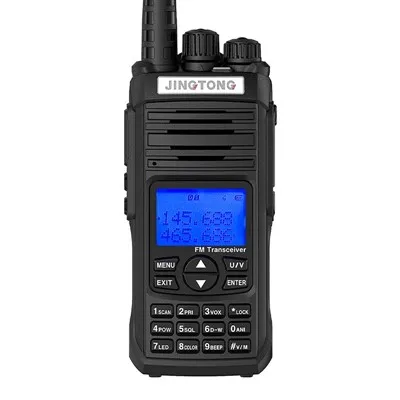
I get it. If you’re used to physical radios with fixed frequencies and a display that shows a channel number, the idea of a “POC radio address” can feel vague, even confusing. POC stands for “Push to Talk over Cellular” (sometimes called PoC, no hyphen, but we use the hyphen here to stick to the standard industry terminology most folks in our space recognize). Unlike analog or digital two-way radios that operate on pre-assigned, government-regulated frequencies, POC radios rely on cell networks to send and receive communication. That difference changes everything about how you connect your team, and the biggest misconception people have is that your “address” is a physical location or a single cell tower ID. Let me break this down, straight from someone who’s spent the last 8 years supplying these radios to job sites across North America.
First, let’s clear up the basics: When we talk about POC radio addresses, we’re not talking about a street address or a tower ID. Instead, it’s a unique digital identifier that ties each POC radio (or the SIM card that makes it work) to your specific communication group. Think of it like this: A traditional radio uses a channel number to link every user tuned into that channel. A POC radio uses a group ID—essentially a private digital address—to send your voice, text, or location only to the people you want to talk to.
Wait, you might be thinking, why not just use a regular phone number? Good question. Regular phone numbers are for one-to-one calls, but POC radio is built for instant, one-to-many communication that’s critical for teams. If your foreman needs to call 10 guys on a construction site in 2 seconds, a regular phone would require dialing each number, which wastes time. POC radio’s group address is pre-programmed so a single push of the Talk button sends your message to every member of that group at once. That’s the core of what makes POC radios so useful for on-the-ground operations.
Let me walk through how this works for our clients, because I see this play out every day. Last month, we worked with a large event production company that was setting up a 10,000-person outdoor music festival. They had 4 separate teams: stagehands, security, audio technicians, and vendors. Each team had its own dedicated group address. When a stagehand needed to report a broken rig, they pushed their POC radio’s Talk button, and only the stagehand group got the message—no security staff spammed with details they didn’t need. If there was a site-wide emergency, the operations team could broadcast to a master group address that included every single user, no matter their team. That’s the flexibility a POC radio address gives you.
Now, there are a couple of terms that sometimes get mixed up with “address” when people ask, so let’s set those straight. There’s the individual device ID, which is a unique number assigned to each POC radio (like a serial number, but for network access). And there’s the cell tower location—if you look at your radio’s signal status, it might show a tower ID, but that’s not your communication address. The address is tied to your account’s group settings, not the physical network infrastructure. That’s why POC radios work across entire regions, not just within a few miles, like traditional radios. I’ve had clients use our POC radios to coordinate a job site in Chicago from their office in Detroit, and the address is the same—no need to re-program frequencies when they move to a new location.
Another common confusion: Do you need a special address for every group? For most small to medium teams, no. You can create multiple group addresses under a single account, tailored to how your team works. For example, a construction company might have a group for each project, a group for management, and a group for safety inspections all under the same main account. If you have 50 people on two different sites 100 miles apart, you can split them into two separate group addresses so noise from one site doesn’t interfere with the other. That’s a huge upgrade from old analog radios, where you’d have to juggle multiple radios for different sites or teams.
Now, let’s talk about how this works in practice when you get a POC radio from our supply. When we set up your account, our team doesn’t just hand you a box of radios and send you on your way. We walk you through creating your group addresses, assigning them to your team members, and testing that every push-to-talk hits the right people. A lot of new buyers assume they’ll have to figure all this out on their own, but that’s not how we operate. We’ve been supplying POC radios long enough to know that the address is just a tool for your team, so we make sure it’s configured to fit your workflow, not the other way around.
Wait, you might be wondering—what about security? If the address is a digital group ID, can someone else join that group and listen in? That’s a valid concern, especially for industries like public safety or critical infrastructure. The short answer: No, not unless you explicitly let them. POC radio addresses are tied to your account and your group’s unique credentials. Unlike some older internet-based communication tools, POC radio runs on private APN (Access Point Name) networks for most commercial and industrial clients, so your group address data doesn’t float around the public internet. We also enable end-to-end encryption for all voice and messages, so even if someone did somehow intercept the signal (which is rare with our network setup), they couldn’t make sense of it. We’ve had clients in the healthcare and energy sectors specifically ask for that layer of security, and we build it right into the address configuration for their teams.
Let me share a real example from a client who switched from traditional radios to our POC radios. A small paving company I worked with last year had 12 crew members spread across 3 job sites in rural Ohio. Their old analog radios would only work within a 3-mile radius, and they’d lose signal every time they moved to a new site on the outskirts of town. Their old “addresses” were tied to physical frequencies, so every time they expanded, they had to pay a technician to re-program all the radios. With our POC radios, we set up 3 group addresses (one for each site) plus a master address for management. The “address” here was just the digital group ID we input into each radio. Now, they can communicate across 50 miles of rural land, no re-programming needed, and they save $400 a month on radio rental fees they used to pay. That’s the difference between a physical frequency-based system and a POC radio’s digital address.
I know a lot of people still stick with what’s familiar, and I get it—changing communication tools for your team is a big decision. The question about “what is the POC radio address” is almost always the first step before someone decides to make the switch, because it’s the core of how the system works. It’s not some random tech jargon or a complicated code; it’s a simple way to organize your team so everyone gets the right information at the right time.
If you’re still unsure, or if you have questions about how to set up group addresses for your specific team, I’m here to help. I’ve been supplying POC radios for over 8 years, and I’ve worked with construction, event, public safety, and logistics teams of all sizes. No question is too small—whether you’re a 5-person crew or a 500-person operation, we can configure the right POC radio addresses to fit your workflow. We don’t just sell equipment; we help businesses streamline their communication, which is why we’ve kept so many clients for years.
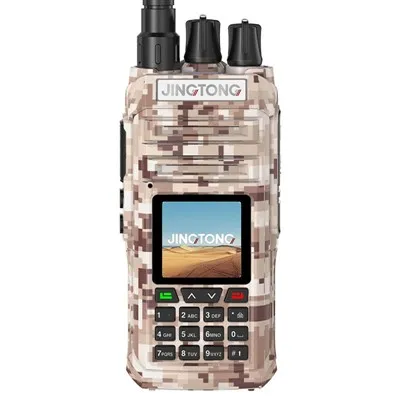
If you’re ready to discuss how POC radios and their group addresses can work for your team, reach out to our team to connect with a specialist. We can walk you through your options, answer any questions you have, and help you get set up with a system that saves you time and money.
Marine Radio References:
- POC Radio Technology Overview, National Association of Industrial Communication Providers, 2022
- Push-to-Talk over Cellular (PoC) for Industrial Use Cases, International Journal of Mobile Communications, 2021
- Commercial POC Radio Security Standards, Federal Communications Commission, 2023
Jingtong (Quanzhou) Electronics Co., Ltd.
We are one of the most professional poc radio manufacturers and suppliers in China, specialized in providing high quality customized service. We warmly welcome you to buy durable poc radio made in China here from our factory. For price consultation, contact us.
Address: No.288, Si Huang Industry Zone, Xia Mei Town, Nan An, Quanzhou, Fujian province, China 362302
E-mail: jtdjj@jtdjj.com
WebSite: https://www.jteradio.com/
