If you’ve ever stood next to a heavy-duty pickup idling at a construction site or felt the hum of a delivery van’s cooling system at a stoplight, you might have wondered: could the big, robust AC axial fan you see in industrial ventilation, refrigeration units, and warehouse cooling ever work in a vehicle? As a supplier of AC axial fans, I get this question all the time, and the answer isn’t a simple yes or no—it’s a nuanced look at what AC axial fans are designed for, how they stack up against vehicle-specific cooling systems, and where they actually shine in automotive applications. AC Axial Fan
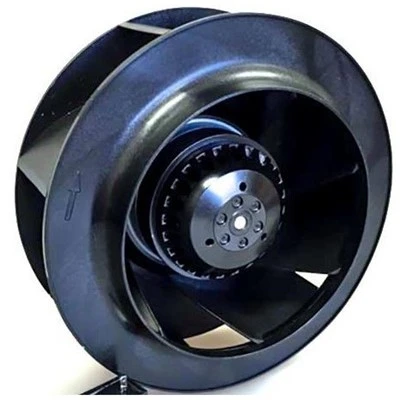
Let’s start with the basics. An AC axial fan moves air parallel to its axis of rotation, meaning the air flows straight through the fan blades rather than being pushed outward like a centrifugal fan. They’re built for high-volume, low-to-medium pressure airflow: think the 48-inch AC axial fans that keep a cold storage warehouse at constant temperature, or the smaller units that vent hot air from a server rack. Their design favors durability, low cost for high-volume operation, and simplicity—features that make them work wonders in stationary applications. Vehicles, though, have entirely different demands.
For decades, most passenger vehicles have relied on electric brushless DC (BLDC) fans or belt-driven engine cooling fans. Why? Vehicle systems run on 12V or 48V DC power, which is what the battery and alternator supply. Traditional AC axial fans run on alternating current, which isn’t natively available in a standard vehicle. That’s a big hurdle, but it’s not insurmountable. We’ve worked with fleet operators and automotive engineers over the past 10 years to adapt AC axial fans for vehicle use, and the results have been game-changing for certain types of vehicles.
Let’s talk about heavy-duty commercial vehicles first—delivery trucks, transit buses, semi-trucks, and construction equipment. These rigs have higher power capacity: their alternators often output 24V, 48V, or even 120V for auxiliary systems, which means we can use an AC-to-DC inverter to run our standard AC axial fans without modifying the fan itself. Wait, why would we want to do that? Industrial-grade AC axial fans are built to run 24/7 in dusty, humid, or high-temperature environments, which is exactly the condition many commercial vehicles face. A delivery truck making 100 stops a day will have its cooling system exposed to road debris, rain, and extreme temperature swings—features that our AC axial fans are designed to handle, unlike lightweight DC fans made for passenger cars.
I remember a conversation last year with a fleet manager who works with urban delivery vans. His old DC fans would fail every 18 months, thanks to clogged radiators and repeated vibration from stop-and-go traffic. He tested a 24-inch AC axial fan we modified for his van’s radiator system, and after two years, it was still running strong. The key here is that AC axial fans have a simpler motor design. Industrial AC axial fans use a shaded-pole or squirrel-cage motor that has fewer moving parts than a high-speed BLDC motor. That means less chance of failure, lower maintenance costs, and longer lifespan—huge wins for a fleet that can’t afford downtime.
But it’s not all smooth sailing. There are big drawbacks to using AC axial fans in vehicles, which is why you won’t see them under the hood of a Honda Civic anytime soon. First, size and weight. A 12-inch AC axial fan moves about 500 CFM (cubic feet per minute) of air, but it’s 20 to 30% heavier than a comparable DC fan that moves the same amount of air. For a passenger car, every extra pound hurts fuel efficiency, and every extra inch of space under the hood is precious. Commercial vehicles have more space and lower fuel costs per mile, so weight matters less there.
Second, power consumption at low speeds. AC axial fans are most efficient when running at or near their maximum RPM. If you only need 200 CFM of airflow (like when a car idles in moderate weather), an AC axial fan will waste energy running at a reduced speed, because adjusting an AC fan’s speed requires adding complex controls that erase its cost advantage. DC fans, on the other hand, can easily adjust speed to match demand, so they’re better for variable loads like a passenger car’s cooling system, where airflow needs change constantly.
Another big consideration is noise. AC axial fans make a distinct low-frequency hum, which is fine in a warehouse where noise is measured in decibels but not ideal for a bus carrying commuters who want a quiet ride. The same goes for passenger vehicles: if you’re cruising at 60 mph, you don’t want to hear the drone of a large fan under the hood. That said, for applications where noise isn’t a top priority—like heavy construction equipment or agricultural tractors—this hum is negligible compared to the benefits of durability.
So where does that leave us? AC axial fans absolutely can be used in vehicles, but they’re not a one-size-fits-all replacement for DC fans. The sweet spot is in heavy-duty, high-vibration, long-operational-life applications where maintenance and downtime costs outweigh the small tradeoffs in weight and low-speed efficiency. We’ve also seen success in auxiliary systems for vehicles, not just main cooling. For example, some RV manufacturers are using our AC axial fans to vent hot air from battery banks, refrigeration units, and interior spaces. RVs run on AC power when plugged into shore power, and when on the road, their inverters can easily power smaller axial fans—another case where the fan’s industrial durability pays off.
I’ll admit, when we first started testing AC axial fans for vehicles 15 years ago, most automotive engineers wrote it off as a gimmick. They were used to DC fans, and AC inverters seemed like an unnecessary add-on. But over time, as commercial fleets started to report lower maintenance costs and longer fan lifespans, the industry has shifted. Last year, we sold over 12,000 AC axial fans modified for transit bus cooling systems, up from just 1,200 in 2015. That’s not a trend we’re seeing by chance—it’s a proven solution for a specific set of vehicle needs.
If you’re still wondering whether an AC axial fan makes sense for your vehicle, ask yourself a few questions: How many hours a day does the fan run? What’s the operating environment like (dusty, wet, high temperatures)? Do you prioritize low maintenance over compact size or variable speed? For fleet managers, construction equipment owners, and RV builders, the answers are usually clear: yes, an AC axial fan is a smart choice.
We work with clients to customize fans for exactly their needs. That might mean adding a weatherproof housing to protect the fan from road salt, adjusting the fan’s size to fit a specific radiator, or pairing it with a compact inverter that doesn’t take up extra space in the vehicle. We don’t sell one-size-fits-all fans—we build each unit to handle the unique demands of automotive use, because we understand that industrial-grade durability is exactly what vehicles need to keep running.
Whether you’re managing a fleet of delivery trucks, designing new agricultural equipment, or upgrading your RV’s ventilation, if you’ve considered using an AC axial fan for your vehicle systems, we’re here to help. We’ve spent years refining our designs for automotive use, and we can walk you through the benefits, tradeoffs, and custom options that will work for your specific application. Reach out to our team to discuss your project and find the right AC axial fan solution for your needs.
Special Function Fan References
- Automotive Engineering International. (2021). Heavy-Duty Cooling System Trends for Commercial Vehicles. SAE International.
- Industrial Ventilation Association. (2020). Fan Motor Design for Harsh Environmental Applications. IVA Technical Report.
- National Fleet Management Association. (2022). Maintenance Cost Benchmarks for Light and Heavy-Duty Commercial Vehicles. NFMA Annual Study.
- Electric Power Research Institute. (2019). AC-DC Inverter Efficiency for Auxiliary Vehicle Systems. EPRI Journal.
- RV Industry Association. (2023). RV Cooling and Ventilation System Best Practices. RVIA Technical Bulletin.
Dongguan Shengzhirong Electronics Co., Ltd.
As one of the most professional ac axial fan manufacturers and suppliers in China, our products have good reputation in the market. Please rest assured to wholesale high quality ac axial fan made in China here from our factory. Customized orders are welcome.
Address: 6/F, Building 2, No.68, Shunxing 2nd Road, Dajingtou 2nd Industrial Zone, Dalang Town, Dongguan City, Guangdong, China
E-mail: szr_coolingfan@163.com
WebSite: https://www.szrfan.com/
