If you’re the kind of person who carries a half-eaten granola bar, lip balm, phone charger, and a random pack of stickers in your plush bag, you’ve probably stared at the smooth, rounded sides of your favorite custom bag and wondered: Can I add pockets to a custom plush bag? As a custom plush bag supplier who’s worked with hundreds of clients—from small boutique brand owners to parents designing bags for their kids—I get this question all the time. It’s not just a random “can I?”; it’s the difference between a bag that holds your stuff and a bag that works for you. Let’s break this down, from the science of plush fabric to the ins and outs of adding pockets, so you know exactly what to expect when you bring this idea to a custom plush bag maker like me. Custom Plush Bag

First, let’s talk about why pockets matter for plush bags, because not all bags need them, but most of us who carry plush bags do. Plush bags are made for comfort, right? The soft, fuzzy fabric feels better against your skin, especially if you’re carrying it around all day, or it’s for a toddler who doesn’t want a scratchy backpack. But that same softness can mean stuff slides around, gets lost, or falls out if there’s no structure. A client last year, a mom whose 4-year-old only wanted a custom plush dinosaur bag instead of a plain school backpack, told me her kid kept losing tiny action figures from the side pockets of their old backpack because they were too flimsy. Another client, a small candle brand owner designing plush tote bags for their customers, said 7 out of 10 people who ordered the bags in our first batch emailed saying they wished there was a spot to hold a matchbox without it shifting against the candle. Pockets aren’t just an extra feature—they’re a functional upgrade that turns a novelty bag into a usable one.
Now, the big question: Yes, you can add pockets to a custom plush bag. But it’s not as simple as sewing a random pouch onto the side; there are a few key factors that make it work well (or not work so well). Let’s start with the most important one: the type of plush fabric you’re using. Not all plush is the same, and that affects both how pockets attach and how durable they are. Plush fabric is usually categorized by pile length—short-pile (1/8 inch or less), medium-pile (1/8 to 1/4 inch), and long-pile (more than 1/4 inch, sometimes called shaggy). Short-pile is the most common for custom plush bags because it’s smooth, doesn’t mat easily, and holds its shape well. Medium-pile is popular for things like animal-shaped plush bags, where the longer fur makes the design look cute. Long-pile is more for decorative bags, not functional ones.
Pocket attachment works differently for each. If you’re using short-pile plush, which is most of our standard inventory, attaching pockets is straightforward. We can use a matching plush fabric for the pocket itself, or a sturdy nylon or cotton blend if you want a pocket that’s more structured for heavy items. Wait, let’s get specific: For a short-pile plush bag, when we add a pocket, we usually sew a base layer of non-woven interfacing to the inside of the plush fabric before attaching the pocket. That interfacing adds a little stiffness so the pocket doesn’t flop over when you put something in it, and it also makes the seam stronger so it doesn’t pull loose over time. For medium-pile plush, though, we have to be careful not to poke through the pile too much when sewing, because the longer fur can get tangled around the needle, leading to uneven seams. That means we use a slightly different sewing foot—one with a smaller groove for the thread—to catch the plush fabric without catching the pile. It adds a little time to the process, but we’ve perfected it over years of making custom plush bags, so the end result is clean, no loose fur around the pocket edges.
Long-pile plush, though? We don’t recommend adding pockets. The long shaggy fur is too soft to hold a pocket’s shape, and sewing through it would leave big gaps where the fur comes loose, which is bad for durability. If your dream bag is a shaggy unicorn plush tote, you can still have small, soft pockets—like a tiny slip pocket for a lip balm—that are lined with matching short-pile fabric, but don’t try to put a phone or a water bottle in it. It just won’t hold up.
Next, where to add the pockets, because location is everything. Pockets can go on the front, sides, inside, or even the back of a plush bag, but each location has pros and cons. Front pockets are the most visible and accessible—perfect for things you grab all the time, like your keys or a mask. The downside is that if the pocket is too big, it can throw off the shape of the plush bag, making it look lumpy. A client last month wanted a custom plush bag for her coffee shop that had a big front pocket for pastries, and when we first drafted the design, the pocket was 10 inches wide and 5 inches deep. It looked great on paper, but when we sewed the prototype, it pulled the front of the plush fabric so tight that the coffee shop’s logo (which was embroidered there) got distorted. We adjusted it to 7 inches wide and 3 inches deep, which was just enough for a small pastry, and kept the shape of the bag perfect.
Side pockets are great for water bottles, umbrellas, or anything you don’t want fumbling around in the main compartment. For plush bags, though, side pockets work best if the bag has a solid base or gusset—meaning it stands on its own when empty. If your bag is just a flat tote without a gusset, a side pocket will pull the fabric off to one side when you put something in it. We fixed this for a youth sports team a couple of years ago: they wanted custom plush duffel bags for their players, each with two side pockets for water bottles. We added a 1-inch gusset to the bottom of the bag first, so the sides had structure, and then attached the pockets to that gusset, not the thin side fabric. It meant the pockets held water bottles perfectly without distorting the bag’s shape.
Inside pockets are the most discreet, and great for things you want to keep secure—like a wallet or a phone that you don’t want to fall out. We love adding inside pockets because they don’t affect the exterior look of the plush bag at all; they’re sewn into the main compartment, usually on the side or the back. One of our most popular custom plush bag designs is a small crossbody for teens, with a tiny inside pocket for AirPods, plus a front pocket for their lip balm. That’s a combination that works perfectly, because it keeps small, easy-to-lose items separate but doesn’t clutter the outside of the bag.
Now, what about the type of pockets? Not all pockets are created equal, and the right style depends on what you’re going to put in them. The most common types we add to custom plush bags are slip pockets, zipper pockets, and snap pockets. Slip pockets are just open pouches—great for light, flat items like a pack of gum or a keychain. They’re simple, cheap to make, and look clean, but they don’t keep things secure if the bag is open. Zipper pockets are the best for security, because they close all the way. We use small, sturdy zippers that match the plush fabric’s color, so they don’t stand out too much, but they’re durable enough to open and close hundreds of times. The only downside? A zipper adds a little to the cost, but most clients say it’s worth it for the peace of mind. Snap pockets are a middle ground—they have a snap closure, so they’re more secure than a slip pocket but easier to open than a zipper. They’re perfect for kids’ bags, because little hands can open snaps without struggling with a zipper. We added snap pockets to a custom plush backpack for a 7-year-old last year, and his mom told us he could open it all by himself to get his favorite toy out, even with his gloves on.
Wait, a common mistake people make when adding pockets to a custom plush bag is making the pocket too small. It’s easy to measure a phone and make a pocket just a little bigger than the phone, but plush fabric stretches a bit when you sew it, and it also compresses a little when you put something in it. So we always add a half-inch to both the width and depth of the pocket to account for that. For example, if you want a pocket to hold an iPhone 15 (which is about 6.06 inches long and 2.82 inches wide), we’ll make the pocket 6.5 inches long and 3.3 inches wide. That way, when you slide the phone in, it’s a snug fit but not too tight, and it doesn’t pull the seam when you put it in or take it out.
Another thing to consider: the weight of the items you’ll put in the pocket. Plush fabric is soft, so if you put something heavy in a pocket—like a 16-ounce water bottle—you need to make sure the pocket is attached with extra stitching, not just a single row of thread. We use a double row of topstitching for pockets that will hold items over 8 ounces, and we add a reinforced seam at the top of the pocket, where all the weight is pulled. For a customer who wanted custom plush tote bags for beach trips, we added large side pockets that hold 20-ounce water bottles, and we reinforced every seam with a small piece of cotton webbing on the inside, so the pockets don’t tear when people fill them up and throw the bag over their shoulder.
Now, let’s talk about costs, because I know that’s a big factor for most people. Adding pockets to a custom plush bag isn’t free, but it’s usually a small add-on compared to the base cost of the bag. A single slip pocket on a small custom plush bag might add $1 to $3 to the total cost, while a zipper pocket adds $3 to $5, and a reinforced side pocket for heavy items adds $5 to $8. The exact price depends on the size of the pocket, the type of fabric, and how many pockets you’re adding. We always provide a free sample of the pocket attachment for clients who are unsure, so you can touch it, test the seams, and see if it’s exactly what you want before we start production.
Wait, there’s a common myth that adding pockets ruins the “plush” vibe of a bag. Let’s bust that. If you design the pockets to match the plush fabric, use clean seams, and attach them in the right place, the pocket can actually add to the bag’s charm. We did a custom plush cat bag a few years ago, where we added small front pockets in the shape of the cat’s paws. It was such a hit that the client ordered 500 more of the bags, with the paw pockets, because people loved that the pockets looked like part of the cat, not an afterthought. It’s all about the design—match the pocket’s fabric, shape, and color to the bag, and it will look intentional, not like a random extra.
What if you have a very specific idea for a pocket, like a secret pocket in the lining, or a pocket that has a little plush character attached? We can do that too. Last year, a client wanted a custom plush bag for her sister’s bachelorette party, with a tiny secret pocket shaped like a champagne flute inside the main compartment to hold a mini bottle of champagne. That’s the kind of unique, custom add-on that makes working with a custom plush bag supplier great—we can adapt to your specific idea, as long as it’s feasible with the fabric and construction.
Now, what about common problems people run into when adding pockets? Let’s talk about those, so you know what to avoid. The biggest problem is pocket sagging. If you don’t add interfacing to the inside of the pocket, or if the pocket is too big for the bag’s structure, it will flop down when you put something in it, pulling the shape of the bag. We test every pocket design in our prototype stage, so we adjust the size or add interfacing before we make the full order. Another common problem is loose seams, which happens when you don’t use the right needle or thread for plush fabric. We use a sharp, fine needle for plush, because a thick needle can poke big holes in the fabric, leading to fraying. We also use polyester thread, which is stronger and more stretch-resistant than cotton thread, so the seams don’t break with use.
A third problem is mismatched fabric. If you use a different type of plush for the pocket than the bag, it will stand out like a sore thumb. We always recommend using the same plush fabric for pockets as the main bag, or a complementary color from our inventory. If you want a structured pocket, a nylon or cotton blend is fine, as long as it’s the same color as the plush so it blends in.
So, to circle back to the original question: Can I add pockets to a custom plush bag? The answer is a resounding yes—when done right, it’s a functional, charming upgrade that makes your bag work for your needs. Whether you want a single front slip pocket, two zipper side pockets, a secret inside pocket, or even paw-shaped pockets for a plush animal bag, it’s possible. The key is to work with a supplier who understands plush fabric, knows how to attach pockets without ruining the bag’s shape, and will test prototypes to make sure the pockets are durable and look great.
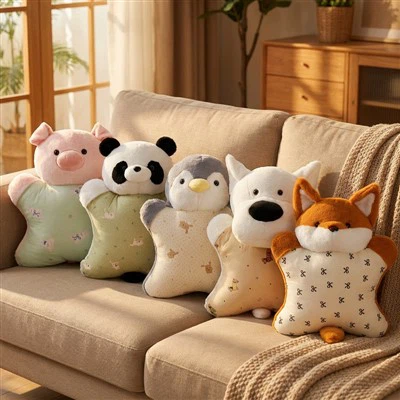
If you’re ready to design your own custom plush bag with pockets, whether it’s for personal use, a small business, or a special event, reach out to a custom plush bag supplier who has experience with pocket additions. We’ll work with you to brainstorm the right pocket style, size, and placement, send you a free prototype to test, and make sure every detail is exactly what you want. Don’t settle for a plush bag that’s just a pretty decoration—make it work for you, with pockets that hold all your stuff without ruining that soft, cozy vibe you love.
Custom Plush Pillow References
- Textile Institute. (2020). “Functional Attachments for Soft Goods: Best Practices for Pocket Construction on Plush Fabrics.” Journal of Textile and Apparel Technology Management, Vol. 17, No. 2.
- American Apparel and Footwear Association. (2022). “Durability Standards for Custom Soft Goods: Seam Reinforcement and Fabric Compatibility.” Technical Bulletin for Custom Bag Manufacturers.
- Plush Toy and Fabric Association. (2021). “Design Guidelines for Plush Character Products: Balancing Aesthetics and Functionality.” Annual Industry Report.
Yangzhou Beyman Toys Co., Ltd.
We are one of the most professional custom plush bag manufacturers and suppliers in China, specialized in providing high quality custom service and OEM&ODM service. We warmly welcome you to wholesale bulk custom plush bag made in China here from our factory.
Address: Room 305, North Bldg, 4 Bldg, Chuangfu Factory, No. 158, Jiannan Road, Hi-Tech Development Zone, Yangzhou City, Jiangsu Province, China.
E-mail: janzen3@beyman.cn
WebSite: https://www.plushtoyschina.com/
