If you’ve ever worked with self-priming pumps, you know they’re workhorses for tasks like transferring water, wastewater, or industrial fluids where standard pumps might struggle to evacuate air from suction lines. But even these rugged units aren’t immune to a silent, damaging issue that plagues many pump systems: cavitation. As a supplier of self-priming pumps, I’ve spent years walking alongside clients who’ve dealt with cavitation’s costly consequences—pitted impellers, reduced flow rates, and even premature pump failure. Today, I want to break down exactly what causes cavitation in self-priming pumps, not just as a textbook definition, but through the real-world scenarios I’ve seen firsthand. Self-priming Pump
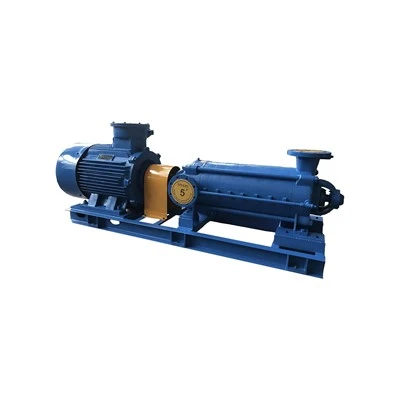
First, let’s ground ourselves in a quick refresher: cavitation isn’t a pump malfunction in itself. It’s a physical process rooted in fluid dynamics, where low-pressure zones in a liquid form vapor bubbles that collapse violently when they move into higher-pressure areas. For a self-priming pump, which is designed to pull liquid from a suction line that might have trapped air, this process is especially sensitive because its suction-side dynamics are more complex than a standard centrifugal pump. A standard pump relies on the impeller’s rotation to create a vacuum, but a self-priming pump adds a separate priming chamber or recirculation loop to purge air from the suction line before it can move liquid. That extra component introduces more opportunities for pressure drops that trigger cavitation.
The most common cause I’ve encountered is insufficient Net Positive Suction Head Available (NPSHA) at the pump’s suction inlet. NPSHA is the total pressure of the liquid at the suction port, minus the vapor pressure of that liquid. Put simply, if there’s not enough pressure at the suction side to keep the liquid from boiling (even at normal operating temperatures), vapor bubbles form. For self-priming pumps, NPSHA is often lower than people expect because of how the pump evacuates air early in operation. Let’s take an example: last year, a small municipal water treatment plant reached out to me after their new self-priming pump started making a racket—like gravel rumbling inside the casing. Their maintenance team had installed the pump 12 feet above the water source, which is a problem because static lift (the vertical distance the pump has to pull liquid from the source) directly reduces NPSHA. For clear water at 60°F, the maximum recommended static lift for a standard self-priming centrifugal pump is around 15 feet. At 12 feet, they were already cutting it close, but then they added a 20-foot suction line with two 90-degree elbow fittings. Those fittings create additional friction loss, which lowers pressure further at the pump’s inlet. The result? NPSHA dropped below the pump’s required Net Positive Suction Head Required (NPSHR)—the pressure the pump needs to operate without cavitation. That’s exactly when those vapor bubbles started forming and collapsing on the impeller and casing walls.
Another underrated cause is trapped air or vapor in the suction line before the self-priming process is fully complete. A self-priming pump’s job is to evacuate air from the suction line to prime itself, but if there’s too much air in the line initially, it can disrupt the normal fluid flow the pump relies on. I worked with a commercial agricultural irrigation company last season that installed a self-priming pump for a new well. The well had a lot of dissolved air in the water, and when the pump started priming, that air mixed with the liquid in the priming chamber to create a frothy, low-density fluid. Low-density fluid has a lower vapor pressure than pure liquid, so when that frothy mixture moved to the impeller, it experienced even lower pressure zones, forming more bubbles. Worse, once the pump was primed, the dissolved air didn’t escape—instead, it stayed in the suction line, creating a kind of “air lock” that fluctuated the pressure at the inlet. The pump would cycle between mild cavitation and normal operation, which is just as bad because the constant pressure shifts beat on the impeller, leading to uneven wear over time.
Improperly sized or damaged priming components are also a frequent culprit. Self-priming pumps depend on parts like check valves, priming chambers, and recirculation ports to work correctly. Last year, a food processing plant’s self-priming pump failed after only 18 months, and when we inspected it, we found the check valve on the suction line was worn. That valve’s job is to keep liquid in the priming chamber after the pump is primed, so the pump doesn’t lose its prime when it shuts off. When the check valve leaked, every time the pump turned off, liquid drained back into the sump, and when it restarted, it had to re-evacuate the air from the suction line all over again. Each restart created low pressure spikes that triggered cavitation, and those repeated cycles pitted the impeller so badly that flow rate dropped by 30% in just a year. It’s a simple issue, but one that’s easy to overlook when you’re focused on the pump’s performance, not the small components that keep it primed.
Fluid properties also play a big role, and I’ve seen this trip up clients handling non-standard liquids. If you’re pumping a liquid with a high vapor pressure—like hot water, solvents, or light oils—its tendency to form vapor bubbles at lower pressure is much higher than cold water. For example, a client that used a self-priming pump to transfer hot process water (180°F) from a batch tank was surprised when their pump started cavitating within days. The vapor pressure of water at 180°F is nearly double that of 60°F water, so even a small pressure drop at the suction inlet was enough to form bubbles. With cold water, that same pressure drop wouldn’t have caused a problem, but the hot water’s increased vapor sensitivity made cavitation unavoidable. We worked with them to adjust the suction piping to reduce friction loss and lower the static lift by 3 feet, which brought NPSHA up high enough to match the pump’s NPSHR.
Another scenario I’ve dealt with is operation beyond the pump’s design specifications. Many clients will buy a self-priming pump sized for the maximum flow rate they need, but if they run it at a flow rate much lower than that, cavitation can occur. Wait—you might be thinking, “Why would low flow cause cavitation?” It’s because at reduced flow, the impeller’s internal velocity distribution changes. The blades move fluid slower, but the low-pressure zones near the impeller eye (the center where liquid enters the pump) actually become more pronounced. I saw this with a construction company that used a self-priming pump to dewater a foundation. The job required the pump to run at half its rated flow for weeks, and eventually, the pump started making a pinging noise. When we checked, the impeller’s NPSHR was now higher because of the low flow, so NPSHA (which was already marginal due to the foundation’s depth) wasn’t enough. The solution wasn’t a new pump—it was adjusting their operation to throttle the discharge valve instead of the suction valve, which helped maintain a more consistent flow rate and reduce the pressure drop at the inlet. It’s a small adjustment, but it makes a huge difference for self-priming pumps that need to handle variable flow.
Cavitation doesn’t just make noise—it causes real, tangible damage. Over time, those collapsing vapor bubbles create micro-jets of liquid that strike the pump’s internal surfaces at speeds up to 1,000 feet per second. That’s enough to erode metal, pit impellers, and even crack the pump casing. I’ve seen impellers so damaged they looked like they’d been sandblasted, and casings with holes worn through. The cost of replacing a pump mid-project is nothing compared to the downtime, so understanding what causes cavitation in your self-priming pump is key to avoiding those headaches.
If you’re dealing with cavitation or want to make sure your self-priming pump is set up to prevent it, our team has the expertise to walk you through your specific setup. We’ve worked with everything from small agricultural applications to large municipal systems, and we can help you calculate NPSHA, adjust piping, or select the right pump for your fluid and operating conditions. Don’t let cavitation derail your project—reach out to our team to discuss your needs. We’re here to help you keep your self-priming pump running smoothly and avoid the costly damage caused by cavitation.
Multistage Pump References
- Karassik, I. J., Messina, J. P., Cooper, P., & Heald, C. C. (Eds.). Pump Handbook, 4th Edition. McGraw-Hill Professional.
- Fluids Engineering Division, American Society of Mechanical Engineers. Cavitation in Pumps and Fluid Machinery. ASME Press.
- Miller, J. E. Internal Flow Systems, 2nd Edition. BH-GN.
- Hydraulic Institute. Centrifugal Pump Fundamentals: A Guide for Specifiers and Users. Hydraulic Institute.
Zhejiang Kaicheng Pump Valve Co., Ltd.
Zhejiang Kaicheng Pump Valve Co., Ltd. is one of the most professional self-priming pump manufacturers and suppliers in China, also supports customized service. We warmly welcome you to buy advanced self-priming pump made in China here and get quotation from our factory. For price consultation, contact us.
Address: No.501 Zhangbao North Road, Dong ou Industrial Park, Oubei town, Yongjia, Zhejiang Province, China
E-mail: sales@cnkcmp.com
WebSite: https://www.kcmpumps.com/
