If you’ve ever had to work with electrical safety testing, chances are you’ve heard of an AC/DC hipot test set. But one question we get all the time—from new engineers, production line techs, and even people who just started out in quality control—is: “How fast is the response time on that thing?” It’s a fair question, honestly. Response time isn’t just some random spec number; it’s the difference between a test that catches a dangerous flaw and one that lets a faulty product slip through. As a supplier who’s been building these test sets for over a decade, I can tell you this isn’t a one-size-fits-all answer. Let’s break it down in plain terms, no stuffy jargon. AC DC Hipot Test Set
First, let’s make sure we’re on the same page about what response time even means here. When you run a hipot test, you’re pumping a high voltage (either AC or DC, depending on the test) between two parts of a device—like the live wiring and the outer metal casing. If there’s a gap, a damaged insulator, or a tiny crack in the insulation, electricity will “leak” across that gap. The hipot set’s job is to detect that leakage and shut off the voltage before the test does damage to the device or, worse, risks a safety hazard.
Response time is how quickly the set detects that leakage current and cuts out the high voltage. Think of it like a smoke detector: if it takes 10 seconds to go off after smoke fills the room, that’s useless for a small fire. Same with a hipot set—if it takes too long to shut off, even a tiny amount of leakage can arc over, melt insulation, or destroy the product you’re testing. That’s why it’s not just a “nice to have” spec; it’s a critical safety feature.
Now, the short answer? Typical response times for a good AC/DC hipot test set are between 1 and 10 milliseconds. Wait, that’s super fast, right? A millisecond is a thousandth of a second. But here’s the thing—“good” is the key word. A lot of cheaper test sets out there might have response times of 50 milliseconds or more, and those are the ones you don’t want on your production line. But let’s not stop at the average, because there’s more to it than just the number.
What actually affects response time? Let’s go through the main factors, because this is where a lot of people get confused. First, the type of test you’re running matters. AC and DC tests work a little differently, and that changes how fast the set can react.
For DC hipot tests: DC is a constant voltage once it’s applied. So when there’s a leakage current, it’s steady from the start. That means the test set’s detection circuit can pick it up almost immediately. Most DC hipot sets we build have a response time around 1 to 5 milliseconds. That’s super quick because there’s no alternating current flipping direction—no waiting for a zero crossing to trigger, which we’ll get to in a second.
AC hipot tests are a different story. AC voltage cycles 50 or 60 times a second (depending on your region), so the current goes up, down, and reverses 50 or 60 times a second. If leakage happens when the current is at its peak, that’s when it’s most dangerous—but the detection circuit has to wait for the current to reach a level it can measure, often around the zero crossing. That adds a little lag. Most AC hipot sets have a response time of 3 to 10 milliseconds. A lot of budget brands will brush this off, but that extra 5 milliseconds can make a big difference. If a fault happens right after the test set turns on, a slower response time might let a tiny arc form before it shuts off.
Next, there’s the sensitivity of the test set. Wait, sensitivity is how small a leakage current the set can detect, right? And here’s the catch: the more sensitive you are, the faster you need to react. If your set is set to detect 0.1 mA of leakage, it has to be way faster than a set that only detects 5 mA. Because a tiny 0.1 mA leak can still cause a shock if it’s not stopped. If a test set is built to handle high sensitivity, it needs a faster response time—otherwise, it might mistake normal, safe leakage (like from a small capacitor) for a dangerous fault. That’s why when we calibrate our test sets, we always match the response time to the required sensitivity for the test. A lot of suppliers just sell you a box with a spec sheet, but we take the time to make sure the two work together.
Another big one: the load you’re testing. Wait, what’s a load here? That’s the device you’re testing, right? Some devices are “capacitive loads”—like motors, transformers, or big plastic casings with wiring inside. Capacitive loads act like a sponge for electricity: when you apply voltage, they take time to charge up, and that creates a small “inrush” current when you first turn on the test. A slow response time might mistake that inrush current for a fault and shut off the test unnecessarily, which is a huge headache on a production line. But a fast response time can tell the difference between the harmless inrush and a real leakage fault. We design our sets with inrush current filtering that works with the response time, so our customers don’t have to waste time restarting tests for no reason.
Now, let’s talk about what happens if response time is too slow. Let’s say you’re testing a power tool for a big brand. The tool has a tiny crack in the insulation between the live wire and the metal handle. That crack is small, so the leakage current is just 2 mA. If your hipot set has a 50 ms response time, that 2 mA is flowing for 50 thousandths of a second. That might not sound like much, but when you’re at 1500V (the standard hipot voltage for power tools), even 1 mA for a split second can be enough to give someone a painful shock. And if it’s a bigger fault? Like a direct short between live and ground, the arc that forms before the set shuts off can melt the insulation, create smoke, or even start a fire. We’ve had customers come to us with stories of budget hipot sets that failed a safety audit because they had slow response times—their products were getting past testing and getting complaints about shocks. That’s why response time isn’t just a tech spec; it’s a way to keep your products safe and your business out of hot water.
Wait, but let’s not pretend every application needs the fastest possible response time. If you’re testing a small electronic component, like a USB charger, maybe you can get away with a slightly slower response time. But even then, we recommend at least 10 ms, because those tiny components have thin insulation that can break down fast. For things like industrial equipment, HVAC units, or medical devices? You need the fastest response time you can get—often down to 1 ms. Medical devices have to be the safest, because they’re used on people, so even a tiny leakage is a big deal.
Let’s also clear up a common myth: a lot of people think “faster is always better,” but that’s not true. If a test set has a response time faster than necessary, it might be too sensitive to tiny, harmless fluctuations in the test setup—like if a wire is a little loose, or the test leads have a little bit of resistance. That leads to “false failures,” which waste time on the production line. We calibrate our test sets so the response time is just fast enough for the application, not faster. That way, you get the safety you need without the hassle of unnecessary test stops.
As a supplier, what do we do to make sure our hipot sets have consistent, reliable response times? It’s not just about slapping a circuit board together. We use high-speed microcontrollers in our sets—way faster than the ones you’d find in a cheap test set. We also use separate detection circuits for AC and DC, so each is optimized for the type of test. For AC, we add a zero-crossing detector so we don’t try to measure current when it’s flipping direction, which would cause a delay. For DC, we skip that step so we can react immediately. We also test every single set before it leaves our shop, running response time tests on 100 different loads (capacitive, resistive, inductive) to make sure it works no matter what you’re testing.
We’ve had customers switch from cheap hipot sets to ours and tell us the difference is night and day. One guy who makes camping gear told us that before, he was getting 20 false failures a day because his old set had a slow response time that mistook inrush current for a fault. Now he gets less than one a day, and he passed his UL audit on the first try. Another customer who manufactures medical sensors said that his old set would miss tiny leakage faults, but ours catches them every time without false stops. That’s the stuff that matters to us—we don’t just sell a test set; we solve problems.
So, to wrap this up: the response time of an AC/DC hipot test set is almost always between 1 and 10 milliseconds, depending on the test type, sensitivity, and the device you’re testing. It’s not a random number, it’s a spec that’s built to keep you safe, avoid false failures, and pass audits. Cheap sets might advertise a “fast” response time, but a lot of them cut corners on the detection circuits to keep costs down, so their actual response time is way slower than what they say.
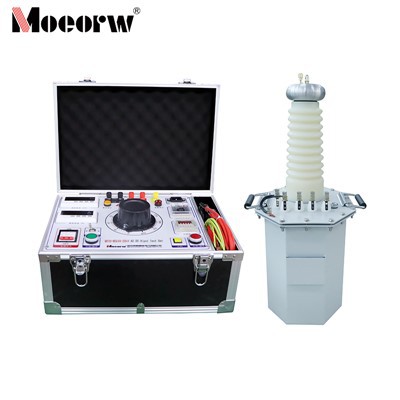
If you’re in the market for a new AC/DC hipot test set, don’t just look at the price. Ask about response time, and make sure it’s matched to the applications you’re testing. We build sets for every industry—from consumer electronics to medical devices to heavy machinery—and we can help you pick the right model for your needs. Stop wasting time on test stops, risking safety issues, and failing audits. Reach out to us to talk through your requirements, and we’ll make sure you get a test set that’s reliable, fast, and fits your budget.
Transformer Load and No Load Loss Tester References
- Underwriters Laboratories (UL) Standard 60950-1, Information Technology Equipment – Safety – General Requirements, 2nd Edition, 2005.
- International Electrotechnical Commission (IEC) Standard 61010-1, Safety Requirements for Electrical Equipment for Measurement, Control, and Laboratory Use – Part 1: General Requirements, 3rd Edition, 2010.
- “High Voltage Testing: Response Time and Fault Detection,” Electrical Manufacturing & Design, Vol. 47, No. 3, March 2022, pp. 24-28.
- “Hipot Testing Basics: What You Need to Know for Production Line Testing,” Quality Magazine, Vol. 61, No. 7, July 2022, pp. 18-22.
- National Electrical Manufacturers Association (NEMA) Standard HB 1, Electrical Safety Testing Requirements, 2021 Edition.
Wuhan Moen Intelligent Electric Co., Ltd.
As one of the most professional ac dc hipot test set manufacturers in China, we’re featured by quality products and good price. Please rest assured to buy high quality ac dc hipot test set in stock here and get quotation from our factory. Customized orders are welcome.
Address: Building A, No.1, Fenghuangyuan 2nd Road, Donghu New Technology Development Zone, Wuhan, Hubei, China
E-mail: info@hvhipotsystem.com
WebSite: https://www.hvhipotsystem.com/
