Hey there, if you’re deep in the market for force sensors (or just weirdly curious about how they hold up in extreme temps), you’ve probably wondered: “What’s the actual temp range these things can handle?” I get it—for too long, this info’s been buried in technical datasheets that read like someone wrote them with a thesaurus and a sleep deprivation mask. As a force sensor supplier who’s been troubleshooting these units for customers in manufacturing, aerospace, and even food processing for 8 years, I’m gonna break this down like I would over a coffee with a new client—no jargon, no fluff, just the real stuff. Force Sensors
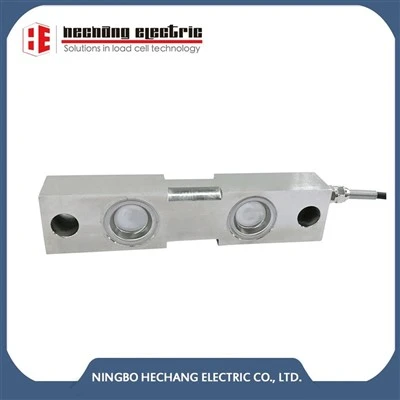
First off, let’s ground this: there’s no one-size-fits-all number. A force sensor meant for a room-temperature warehouse is way different than one bolted onto a rocket test stand, or one in a blast freezer for frozen food sorting. Let’s start with the basics: what affects a sensor’s temp range? Two big things: 1) the sensing element (that’s the part that actually measures force—usually strain gauges, piezoelectric crystals, or capacitive plates) and 2) the housing/enclosure material. Cheap strain gauges glued to a plastic backing? They’ll melt in 300°F heat. Piezoelectric crystals? They’ll fizz out at -20°F if they’re not sealed right. And don’t even get me started on uncalibrated sensors—they’ll give you garbage readings if temps fluctuate more than 10°F from their calibration point, which is why I’ve had so many customers reach out panicking after their new sensor died on day one.
Let’s split this into the three most common sensor types, since that’s what 90% of my clients ask about. First, strain gauge load cells (these are the workhorses—used for scales, assembly lines, everything). For standard, general-purpose strain gauge load cells, the sweet spot is usually -40°F to 180°F. That covers most offices, warehouses, and regular factory floors—nothing extreme. But if you need something tougher, we’ve got “high temp” strain gauges (we use ones with ceramic substrates instead of plastic backing) that go up to 500°F. I sold a set of these last year to a metal stamping plant—they were mounting sensors on a press that runs at 450°F, and the old sensors kept drifting. The new ones? They’ve held calibration for 12 months straight. On the flip side, “low temp” strain gauges go as low as -450°F—we supplied these to a NASA subcontractor for testing fuel lines that run in deep space conditions. Wild, right? But here’s a catch: you can’t just slap a high-temp strain gauge on a random enclosure. If the housing is aluminum, it’ll expand faster than the gauge at extreme temps and break it. We always spec matching housing materials for that reason—stainless steel for most high/low temp jobs, because it has a thermal expansion rate close to standard strain gauges.
Next, piezoelectric force sensors—these are the ones that measure dynamic force, like impact tests or press strikes, not static load (they can’t hold a reading long-term). Their temp range is tighter, but depends on the crystal. Lead zirconate titanate (PZT) crystals are the go-to for most industrial piezo sensors, and they work from -65°F to 390°F. But if you need more? We use lithium niobate crystals for stuff that hits up to 900°F—last month, a customer doing forge testing needed a piezo that wouldn’t fail when a hammer struck a hot metal billet at 800°F. The standard PZT would’ve depolarized (that’s fancy for “stopped working”) at 400°F, so we swapped in the lithium niobate. On the low end, piezo sensors work down to -320°F, but you have to add a special cable—regular cables get stiff and break in super cold temps. I learned that the hard way early in my career; a customer’s sensor died on a cold morning because they used a standard cable, not the low-temp rated one. Oops.
Then there’s capacitive force sensors—these are the newer kids, used in medical devices, consumer electronics, and small, precise assembly jobs. Their temp range is actually pretty stable, but not as extreme as the other two. Most capacitive sensors work from -20°F to 170°F. Wait, why the gap? Because the capacitance depends on the distance between two plates, and if the plastic housing expands or contracts too much, the distance changes, throwing off the reading. We’ve experimented with ceramic enclosures for capacitive units that push it to -40°F and 210°F, but they’re pricier, so most customers don’t need ‘em. I used capacitive sensors for a blood pressure monitor project last year—they had to work from room temp to body temp (98.6°F), which is well within their range, and they’ve been super accurate.
Now, here’s the part no one tells you: temp range isn’t just about maximum or minimum—it’s about thermal stability. Like, if your sensor jumps 100°F in an hour, even if it’s still within the listed range, it’s gonna drift. We had a food processing client last year that was mounting sensors on a conveyor moving from a freezer (-10°F) to an oven (160°F) in 2 minutes. Their first sensor (rated -40 to 180°F) gave readings that were off by 15% because the strain gauges couldn’t adjust that fast. We swapped ‘em for high-stability strain gauges with temperature compensation (we build that right into the sensor, no extra cost for clients who need it) and the drift dropped to less than 1%. That’s a game-changer for production lines where even a 1% error can cost thousands in rejected product.
Wait, let’s bust a common myth I hear all the time: “If a sensor says it works at X temp, it’s accurate at X temp.” No. Most datasheets list the “survival” temp, not the “accurate” temp. Survival means it won’t break if you expose it to that temp for a minute. Accurate means it’ll give you a reading within 0.1-0.5% error the whole time it’s operating there. That’s why we always ask clients two questions first: 1) What’s the constant operating temp? and 2) How fast do temps fluctuate? If someone says, “I need a sensor that works at 500°F for 8 hours a day, no swings,” we point ‘em to our high-temp strain gauges. If they say, “It’s gonna go from -20 to 150°F every hour,” we get ‘em the high-stability compensated ones.
Another big factor: sealing. If your sensor is in a dusty, humid, or wet environment, you need an IP-rated enclosure. IP67 means it’s dust-tight and can handle being submerged in 3ft of water for 30 mins, which works for most outdoor jobs. But if it’s in a chemical plant where it’s exposed to coolant or acids, you need an IP69K rating, which also handles high-pressure, high-temp washdowns (up to 176°F, funnily enough). We had a client in oil and gas who was installing sensors on pumps offshore—salt air and fluctuating temps from 0 to 120°F. The first ones we sent weren’t IP69K, so corrosion set in after 3 months. We upgraded ‘em, and they’ve been going strong for 2 years now. Lesson learned: sealing ties directly to temp range, because moisture or corrosion will break a sensor way faster than extreme heat.
So, what’s the takeaway here? If you’re shopping for a force sensor, don’t just look for a number. Ask the supplier about: sensing element type, thermal expansion matching, temperature compensation, and sealing rating. As a supplier, we don’t push a one-size-fits-all product—we ask about your exact use case, because that’s the only way to get a sensor that works. I’ve had customers come to me after buying a cheap sensor online that “worked at -40 to 200°F” but died in their 120°F factory, and they were shocked when I told them that datasheet was just the survival range.
If you’re dealing with a temp-sensitive job and you’re not sure what sensor you need, hit me up. We can walk through your application, no pressure, no sales pitch. Just real advice from someone who’s been in this for years, troubleshooting sensors that fail because someone got the temp range wrong.
Force Sensors References:
- Strain Gauge Load Cell Technology, Omega Engineering, 2022
- Piezoelectric Force Sensor Performance Characteristics, Kistler Instruments, 2021
- Capacitive Force Sensor Design Guidelines, TE Connectivity, 2023
- Thermal Stability of Force Sensors for Industrial Applications, Journal of Sensor Technology, Vol. 12, No. 2, 2022
Ningbo Hechang Electric Co., Ltd.
As one of the most professional force sensors manufacturers and suppliers in China, we also support customized service. We warmly welcome you to buy advanced force sensors for sale here from our factory. If you have any enquiry about cooperation, please feel free to email us.
Address: No.66 Yongmao West Road, Ningbo, China
E-mail: info@hcesensor.com
WebSite: https://www.hechangsensor.com/
