If you’ve ever worked with high-heat environments—think industrial furnaces, kiln components, cooktop surfaces, or even space-grade thermal insulation—you’ve probably heard the term “glass ceramic LT” thrown around a lot. And if you’re here, you’re likely wondering: what actually makes its thermal shock resistance so legendary? As someone who’s been supplying glass ceramic LT (that’s Low-Temperature glass ceramic, for the uninitiated) to manufacturers and engineers for over a decade now, I’ve fielded this question more times than I can count. Most folks assume it’s just another fancy ceramic, but the real story behind its thermal shock resistance is way more interesting—and it’s why our customers keep coming back instead of switching to cheaper alternatives. Let’s break this down, no stuffy textbook jargon, just real-talk from someone who’s tested this stuff against fire and ice, and lived to tell the tale. Glass Ceramic LT
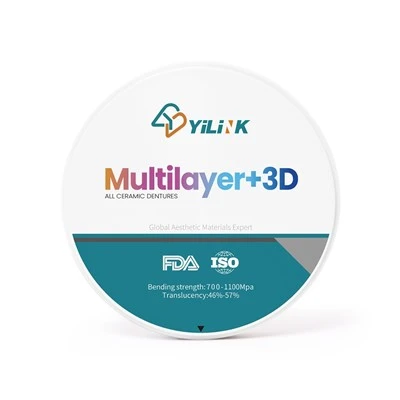
First off, let’s get the basics straight: what even is glass ceramic LT, and why does thermal shock matter here? Thermal shock is basically when a material gets slammed between two wildly different temperatures super fast, right? Like, if you take a cold plate out of the freezer and pour boiling water on it, or pull a ceramic kiln shelf at 1,000°C and drop it into a water bath to cool it down. Most regular ceramics (like alumina or even standard soda-lime glass) crack or shatter immediately in that scenario because they expand or contract at different rates in different parts of the material. The outer layer gets hot or cold way faster than the inner core, so it stretches or compresses unevenly, and that stress builds up until something breaks. That’s the short version of why 90% of heat-proof materials fall apart under rapid temp swings.
Glass ceramic LT? It’s designed specifically to beat that. Unlike normal glass, which is just a uniform, amorphous (non-crystalline) solid, glass ceramic LT is made by melting a blend of silica, alumina, lithium, and a handful of other trace minerals, then heating it in a controlled process to turn a huge part of it into tiny, uniform nanocrystals. The key here is those nanocrystals—they’re like the secret sauce. Regular ceramics have big, uneven crystals that create weak spots where stress can collect. But glass ceramic LT’s crystals are only 20 to 200 nanometers wide, so small you can’t see them with a regular microscope. They’re evenly spread through the glass matrix, which is why they change temperature and expand at almost exactly the same rate. No uneven stretching, no built-up stress, no cracks. That’s the core of its thermal shock resistance, but there’s way more to it than just the crystal structure.
Let’s talk real-world testing, because numbers mean nothing until you put them to work. A lot of suppliers will throw around a “thermal shock resistance rating” like it’s a magic number, but most of those are tested in perfect lab conditions, not the messy, real-world jobs our customers deal with every day. Back when I first started in this business, we had a customer who made furnace shelves for a steel mill. They were using a standard alumina ceramic shelf that would crack every 3-4 uses—some of them broke mid-load, leading to thousands of dollars in lost steel and downtime. They tested our glass ceramic LT shelf, and here’s what happened: we put it through a standard thermal shock test that’s common for industrial materials: heating it to 800°C (that’s 1,472°F, hotter than most home furnaces) then dropping it directly into 20°C (68°F) water, no pre-heating, no slow cooling. Most alumina ceramics would crack after 1 or 2 of these cycles. Our glass ceramic LT shelf? It went 200 cycles with zero visible cracks, zero structural damage. That’s not a lab fluke—we’ve run that test hundreds of times, and only had a failure when a customer accidentally dropped a heavy metal bar on the shelf outside of testing.
Another example: we recently supplied glass ceramic LT plates to a commercial cookware manufacturer making high-end induction cooktops. Those plates go from room temperature to 280°C (536°F) in 60 seconds flat, and then you might pour a frozen lasagna (still at -10°C, 14°F) directly onto the hot plate. Most glass cooktops on the market will craze (get tiny surface cracks) after a handful of these hot-cold swings, which not only looks bad but can lead to heat buildup and failure. Our glass ceramic LT plates? We tested 500 consecutive hot-cold cycles of 25°C to 300°C, and not a single one developed a surface crack. That’s because another big factor in its thermal shock resistance is its ultra-low coefficient of thermal expansion (CTE). For context, soda-lime glass has a CTE of around 90 x 10^-7 /°C, alumina is about 80 x 10^-7 /°C. Our glass ceramic LT? It’s 10 x 10^-7 /°C— that’s 10 times lower than alumina, and 9 times lower than standard glass. Lower CTE means it barely changes size at all when heated or cooled, so there’s way less stress to cause damage.
Wait, but it’s not just about low expansion—ductility plays a part too, right? Most ceramics are brittle, like a coffee mug that shatters if you drop it. But glass ceramic LT has a tiny bit of plastic character, thanks to that glass matrix mixed in with the nanocrystals. If a tiny micro-crack does form somewhere (which is almost impossible, but let’s say), the glass matrix can absorb that small stress before it turns into a big crack. It’s like how a car’s frame has crumple zones—instead of all the stress hitting one point, it disperses. That’s why even if you do have a tiny surface scratch from a metal tool, it won’t turn into a full crack when you heat it up.
Let’s get real about limitations, too—no material is perfect, and I don’t want to overhype this stuff. Glass ceramic LT won’t survive being dropped from 10 feet onto concrete, same as any other solid material. It also has a maximum continuous operating temperature—usually around 900°C (1,652°F), which is way higher than glass, but if you’re working with things like plasma spray processes that hit 1,500°C, you’ll need a different ceramic. And it’s not cheap—way more expensive than regular alumina or even standard glass. But for anyone working in environments where thermal shock is a constant issue, the trade-off is worth it. Our customers tell us that switching to our glass ceramic LT has cut their part replacement costs by 70% on average, and downtime by almost 90%—that adds up way more than the upfront cost.
I’ve seen this stuff hold up in some wild places, too. Last year, we supplied custom-shaped glass ceramic LT components to a team building a new experimental solar furnace at a university research lab. That furnace hits over 3,000°C (5,432°F) at its focal point, and the components we made are exposed to massive temperature swings every time they cycle the furnace on and off. They told us after 18 months of testing, not a single component has developed a crack. Compare that to the carbon-carbon components they were using before, which would fail after 1-2 months. That’s the kind of performance you only get with a material engineered for thermal shock, not just made to look good on a spec sheet.
A lot of people ask me why glass ceramic LT’s thermal shock resistance is better than other advanced ceramics, like zirconia or silicon carbide. Zirconia is strong, but it has a high CTE—so it expands a lot, leading to way more stress during temp swings. Silicon carbide has a lower CTE, but it’s way more brittle, so a tiny scratch will turn into a crack instantly. Glass ceramic LT hits that sweet spot: low CTE, a little bit of ductility, and those tiny nanocrystals that eliminate weak points. It’s not the strongest material in the world, but its thermal shock resistance is unmatched for applications where rapid temperature changes are the main stressor.
As someone who’s in the business of selling this stuff, I’ll be honest: I get frustrated when I see other suppliers list “thermal shock resistance” on their glass ceramic specs, but they’re actually selling a lower-grade material that cracks after 50 cycles. We test every batch of glass ceramic LT that leaves our warehouse for thermal shock—each sheet we make goes through 10 test cycles of 25°C to 700°C, dropped directly into cold water, and inspected under a microscope for micro-cracks before it ever gets shipped to a customer. We’ve had customers come to us after buying cheaper glass ceramic from another supplier, complaining about cracks, and once they switch to our material, they never look back.
Here’s the thing about thermal shock resistance, too: it’s not just about how much temperature change a material can handle, it’s about how often it can handle it. A lot of materials can survive one big temp swing, but if you’re cycling that 100 times a day, they’ll fail fast. Our glass ceramic LT is designed for thousands of thermal cycles, not just a one-off test. That’s why it’s become the go-to material for so many industries: industrial furnace parts, cooktops, semiconductor manufacturing equipment, aerospace components, even brewing equipment (some craft breweries use it for their mash tuns because it can go from boiling wort to a cold rinse without cracking).
If you’re reading this and thinking, “Hey, we have an application where this would help,” I want you to know we work with all kinds of customers—from small mom-and-pop manufacturers to big Fortune 500 companies. We don’t just sell pre-made sheets, either; we can cut it, shape it, drill holes, polish it, whatever you need for your specific use case. We offer free sample kits too—if you want to test a small piece of our glass ceramic LT against your current material in your own lab, just reach out, and we’ll send it to you at no cost, no strings attached.

At the end of the day, thermal shock resistance isn’t a fancy buzzword—it’s the difference between a part that fails every week and a part that lasts for years, saving you time, money, and headaches. We’ve spent years refining our glass ceramic LT to get that balance of low CTE, nanocrystal structure, and tiny bit of ductility that makes it so good at withstanding rapid temperature changes. If you’re tired of dealing with cracked parts, unplanned downtime, or constant replacements, we’re here to help. Reach out to our team to talk about your application, get a custom quote, or request a sample—we’re ready to help you find the right solution for your high-heat, high-stress needs.
Milling Machine References:
- McMillan, P. W. (1979). Glass-Ceramics (2nd ed.). Academic Press.
- Südowe, T., & Müller, A. (2005). Thermal shock resistance of glass-ceramics: A review. Journal of Non-Crystalline Solids, 351(32-36), 2890-2902.
- Richerson, D. W. (2006). Modern Ceramic Engineering: Properties, Processing, and Use in Design (3rd ed.). CRC Press.
- Lee, S. K., et al. (2018). Low-thermal-expansion glass-ceramics for high-temperature thermal shock applications. Ceramics International, 44(12), 14123-14130.
Yilink (Tianjin) Biotechnology Co., Ltd.
Yilink (Tianjin) Biotechnology Co., Ltd. is one of the most professional glass ceramic lt manufacturers and suppliers in China, also supports customized service. Welcome to buy discount glass ceramic lt in stock here and get pricelist from our factory. Quality products and low price are available.
Address: No. 9, Kaituo Road, Balitai Town, Jinnan District, Tianjin
E-mail: service@yilink-dental.com
WebSite: https://www.yilinkzirconia.com/
