If you’ve ever reached out to Huizhou Coated Webbing Co., Ltd. as a materials supplier, you already know that one of the most common questions we get from their procurement team is simple: What raw materials are you sourcing for your coated webbing lines? For those of us who work directly with Huizhou Coated Webbing Co., Ltd., this question isn’t just a box to check—it’s the foundation of every partnership that’s lasted years, even decades. I’ve been in the raw material supply game for 12 years, and I’ve worked with a handful of large-scale webbing manufacturers, but Huizhou Coated Webbing Co., Ltd. stands out because their sourcing isn’t just about getting the cheapest roll; it’s about pairing every raw material with a clear, customer-focused use case. I’ve sat in on dozens of their pre-production meetings, watched their quality team tear down incoming shipments, and even stood next to their production lines as new material was tested for stretch and adhesion. This isn’t generic sourcing—their raw material list is tailored to the specific types of coated webbing they manufacture, and every choice ties back to the end product: straps for outdoor gear, medical devices, luggage, industrial lifting, and everything in between. Let’s break down exactly what they source, why each material matters, and how working with them means focusing on consistency, not just cost. Huizhou Coated Webbing Co.,Ltd

First, and most critical for 80% of their core product lines, is the base webbing filament. Huizhou Coated Webbing Co., Ltd. doesn’t buy random off-the-shelf base webbing—they split this into two distinct categories, each with strict performance parameters. The first is high-tensile polypropylene (PP) filament, which makes up the bulk of their industrial straps, outdoor backpack straps, and heavy-duty cargo webbing. I’ve learned that Huizhou Coated Webbing Co., Ltd. doesn’t accept PP filament with a tensile strength below 8.5 grams per denier (g/d) for this line, a bar they set years ago after a load failure in a customer’s heavy-duty pallet straps. Their team tests every incoming batch for resistance to UV exposure too—something many smaller webbing companies skip, but which is non-negotiable for outdoor customers. The second base filament they source is polyester (PET), reserved for products that need more flexibility or better abrasion resistance. Unlike PP, which is rigid and budget-friendly, PET filament has a higher melting point (around 260°C vs. PP’s 165°C), so it holds up better to repeated rubbing on luggage wheels, motorcycle gear, or industrial machinery. Huizhou Coated Webbing Co., Ltd. specifies that their PET filament must have at least 9.0 g/d tensile strength, and they only source from facilities that use 100% virgin PET—no reprocessed or “hybrid” filament that has been mixed with virgin material, even if it’s cheaper. They’ve had bad experiences with reprocessed filament in the past, where inconsistent molecular structure led to random stretch failures 6 months after delivery, so that’s a hard line.
Next up is the coating material, which is what makes Huizhou Coated Webbing Co., Ltd.’s webbing different from plain, uncoated straps. This is where their sourcing gets really specific, because the coating needs to bond tightly to the base filament while delivering targeted performance. The primary coating they use is PVC (polyvinyl chloride), but not just any PVC. For water-resistant straps, luggage handles, and marine webbing, they source a flexible, phthalate-free PVC compound tailored for webbing applications. Unlike rigid PVC used for pipes, their coating has a Shore A hardness of 75–80, which is soft enough to grip but tough enough to resist cracking when bent repeatedly. They also require that the PVC has a minimum 50% elongation at break, so it doesn’t shatter when loaded with weight. For products that need to withstand extreme temperatures—like industrial lifting straps used in cold storage or arctic climates—they source a modified PVC compound with impact modifiers that keep it flexible down to -40°C, a requirement their team developed after a customer reported strap cracking in a Canadian winter construction project. When it comes to sourcing this PVC, Huizhou Coated Webbing Co., Ltd. works with only three approved suppliers globally, none of which cut corners on additive packages; every batch comes with a formal test report for tensile strength, peel adhesion to base webbing, and chemical resistance to saltwater, oils, and common cleaning agents.
But PVC isn’t the only coating they use. For medical-grade webbing—something Huizhou Coated Webbing Co., Ltd. has expanded into over the last 5 years—they source polyurethane (PU) coating, specifically medical-grade thermoplastic polyurethane (TPU). This is a high-performance material that’s far more flexible than PVC, resistant to microbial growth, and compatible with skin contact, making it ideal for orthopedic braces, wheelchair straps, and medical immobilization devices. Their TPU coating must meet ISO 10993 biocompatibility standards, and they require suppliers to provide annual third-party test results for cytotoxicity and skin irritation. Unlike many webbing companies that use a one-size-fits-all TPU, Huizhou Coated Webbing Co., Ltd. sources two types of TPU: a Shore A 85 for soft, skin-friendly medical straps, and a Shore A 95 for heavy-duty medical lifting aids that need extra durability. I’ve seen their lab team run a “scratch test” on every incoming TPU batch—dragging a steel blade over a coated sample under 1kg of weight to ensure no cracking or peeling, a test most competitors don’t bother with because it takes extra time and material.
Another less talked about but critical raw material Huizhou Coated Webbing Co., Ltd. sources is adhesive primers for base webbing. This is a step most people don’t see, but it’s what ensures the coating doesn’t peel off the base filament under load. For PP base webbing, which is naturally non-polar and hard to bond to, they source a chlorinated polyolefin (CPO) primer, specifically formulated to work with their PVC and TPU coatings. They don’t use generic primers—their quality team works closely with each primer supplier to adjust the formulation’s drying time and adhesion strength to match their production line speed, which tops out at 100 meters of coated webbing per minute. For PET base webbing, which is more polar and easier to bond, they use a water-based acrylic primer, which is more eco-friendly and has lower VOC (volatile organic compound) emissions than solvent-based primers. Huizhou Coated Webbing Co., Ltd. prioritizes low-VOC materials across the board, not just because it aligns with global environmental regulations, but because their own customers (especially in Europe and North America) now require products that meet REACH standards and low VOC limits. I’ve attended their quarterly sustainability meetings, and they’ve made it clear that any supplier who wants to work with them must provide a full REACH compliance dossier for every raw material, no exceptions.
Wait, there’s one more key raw material I almost forgot: thread and stitching reinforcement. For webbing that carries heavy loads—like industrial lifting straps, climbing gear, or wheelchair harnesses—Huizhou Coated Webbing Co., Ltd. doesn’t rely just on the coated filament; they add a secondary stitch line along the edges of the webbing to prevent fraying. For this, they source high-tensile, UV-resistant PET thread with a minimum tensile strength of 12 g/d, even stronger than the base filament in some cases. They don’t use nylon thread, because it stretches too much under load and loses strength over time, and they’ve tested cotton thread, which frays after just a few washes or exposure to sunlight. Their thread suppliers are required to provide a 5-year UV resistance test report, because outdoor customers expect their webbing straps to last for years without fraying at the edges. I’ve seen them test a stitched sample by running it through a fraying machine—rubbing it against a steel bar 10,000 times at 50°C—and only batches that show less than 1% fraying pass.
All of this matters because Huizhou Coated Webbing Co., Ltd. isn’t a small, local webbing manufacturer; they sell to clients all over the world, from small outdoor gear brands to large medical device companies and Fortune 500 logistics firms. Their raw material choices aren’t arbitrary—they’re the result of 20+ years of solving problems for customers. For example, when a major European luggage brand came to them 7 years ago complaining that their coated straps cracked during winter shipping in Norway, Huizhou Coated Webbing Co., Ltd. didn’t just switch to a thicker PVC; they tested 12 different PVC formulations before settling on a modified compound with low-temperature impact resistance, and then revised their primer to ensure better adhesion at cold temperatures. That’s the kind of attention to detail that comes from not treating raw materials like commodities, but like a core part of the product.
As a supplier, working with Huizhou Coated Webbing Co., Ltd. is different from other customers I’ve had. They don’t just send a PO and wait for delivery; their procurement team provides detailed specifications for every raw material, including test requirements, compliance standards, and even application-specific performance needs. They also work closely with suppliers to solve problems, not just penalize when something goes wrong. Last year, a shipment of PP filament had a 2% deviation in tensile strength—enough to be rejected by most customers—but Huizhou Coated Webbing Co., Ltd. worked with us to test the filament in a small batch of their outdoor straps, found that the deviation was within their performance threshold for that product line, and helped us adjust our production process to avoid future issues, rather than just rejecting the entire shipment. That’s the kind of partnership they build, which is why their supplier base is so loyal—most of their key raw material partners have worked with them for 10+ years.
If you’re a raw material supplier looking to work with Huizhou Coated Webbing Co., Ltd., the first step is to come prepared. They don’t care about flashy marketing or lowball quotes; they care about consistent quality, compliance with global standards, and a willingness to collaborate on product-specific needs. Whether you’re a filament producer, coating compound manufacturer, primer supplier, or thread maker, Huizhou Coated Webbing Co., Ltd. is always looking for reliable partners who understand that the raw material is the backbone of a great coated webbing product.
If you’re interested in exploring a partnership with Huizhou Coated Webbing Co., Ltd. to supply their raw material needs, reach out to their procurement team to discuss your product, capabilities, and compliance credentials. The team is eager to connect with trusted suppliers who share their focus on quality and customer-focused performance.
General PVC Tube References
- Huizhou Coated Webbing Co., Ltd. Internal Quality and Raw Material Specification Manual, 2023.
- International Organization for Standardization (ISO) 10993, Biological Evaluation of Medical Devices, 2022.
- Registration, Evaluation, Authorization and Restriction of Chemicals (REACH) Regulation, European Union, 2021.
- American Society for Testing and Materials (ASTM) D4595, Standard Test Method for Tensile Properties of Webbing, 2020.
Huizhou Guanghai Electronic Insulation Materials Co.,Ltd
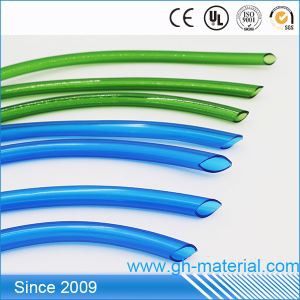
Guanghai Electronic, founded in 2009, is one of the leading medical grade pvc tube manufacturers and suppliers in China, offering you the customized service and the free sample for checking. Through special extrusion, this medical grade pvc tube made in China must be your best choice.
Address: 4th Floor, Building A13, Zhongchuang Yingke New-Generation Information and Intelligent Manufacturing Industrial Park, No. 1 Chenwu Road, Start-up Area, China-Korea (Huizhou) Industrial Park, Zhongkai High-tech Zone, Huizhou City
E-mail: sales01@gh-material.com
WebSite: https://www.gh-material.com/
