If you work in the injection molding industry, you know large parts—think auto body panels, industrial appliance housings, or even bulky plastic pallets—come with their own set of headaches. The cycles are slow, the parts are heavy, and one wrong move during extraction can scratch a high-value component, damage your mold, or even put a worker at risk. As an injection molding robot supplier who’s worked with 100+ molder facilities over the past 12 years, I’ve seen way too many teams pick the wrong robot for large parts, costing them thousands in downtime, scrap, and missed delivery deadlines. Today, I’m pulling back the curtain on how to choose the right robot for big, bulky molded parts—no jargon, no sales fluff, just real lessons from the factory floor. Injection Molding Robot
Let’s start with the biggest misconception I hear all the time: “A robot is a robot, right? Just pick the biggest one.” Wrong. Large part molding is a niche within automation, and scaling up a standard small-part robot rarely works. I once consulted a Midwest auto parts molder who tried shoehorning a 5-axis general-purpose robot to handle 48-inch front bumper covers. It could reach, sure, but the arm flexed so much during extraction that it left tiny, invisible part flaws that caused 12% scrap rates—and when they tried to add stackers for finished parts, the robot’s payload limit meant it couldn’t lift two bumpers at once, doubling cycle time. That was $200,000 in avoidable scrap and overtime in six months, all because they skipped the fundamentals of large part robot selection.
First, let’s anchor this to core metrics specific to large parts. When we say “large parts,” we’re talking about components where one or more dimensions exceed 36 inches (91 cm) and weigh 25 lbs (11 kg) or more—though some industrial pallets can hit 100 lbs+. For these, three non-negotiable specs are payload, reach, and rigidity, and you can’t look at them in isolation. Payload isn’t just the weight of the part; you have to add the weight of the end-of-arm tool (EOAT), any sensors (like part presence or quality cameras), and the safety features you’ll need. For a 30-lb appliance door, that might add another 10 lbs for EOAT and a light curtain, so your minimum payload should be 40 lbs—never round down. I tell customers to pad that number by 20% to account for unexpected add-ons, because you will add them later.
Next is reach. This isn’t just the horizontal reach from the robot base to the mold. For large parts, you need to consider the space you’re extracting into: do you have a fixed conveyor, a rotating turntable, or a stacker for finished parts? If your mold is 50 inches wide, the robot’s horizontal reach needs to be at least 55 inches to clear the mold and place the part without crashing into adjacent equipment. I’ve seen molder plans that only calculate horizontal reach, forgetting that vertical clearance matters too—especially for parts that need to be stacked, which adds 12–18 inches per layer. A common mistake here is choosing a robot with a nominal reach that works in a test setup, but once you add mold draft angles and EOAT offset, it doesn’t have enough clearance. Rigidity is the third key spec, and it’s the one most overlooked. Small-part robots have lightweight arms optimized for speed, but large parts need a rigid arm to avoid vibration during movement. That flex I mentioned with the bumper cover? It came from a robot with a hollow aluminum arm that bent under the load of the part and EOAT, causing the robot’s end effector to twist, scratch the part, and even shift alignment for subsequent cycles. For large parts, look for robots with cast iron or high-strength steel arms—they’re heavier, yes, but the vibration control cuts scrap rates by 8–10% on average, per data from the Society of Plastics Engineers (SPE).
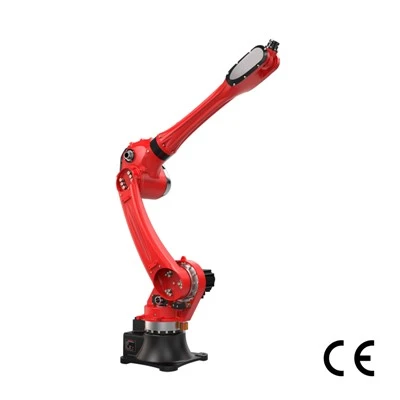
Once you’ve nailed those core specs, the next decision is what type of robot to use for large parts. Here, there are three main categories, and each is better for specific use cases. The first is the 6-axis articulated robot. These are the most flexible, which makes them great for parts that have complex geometry or need to be oriented during extraction—think car bumpers that need to be flipped 90 degrees to fit a packaging crate. I sell more 6-axis robots for large parts than any other type, but they have a tradeoff: they’re bulkier, take up more floor space, and have a longer setup time than other options. For example, a 6-axis robot might take two days to program for a new part, whereas another option takes half a day. That’s a big factor if you run short production runs or switch molds frequently.
The second type is the gantry robot (also called a linear robot). These are built specifically for large, heavy parts, with steel rails that span the full length of your molding cell. Gantry robots have the highest payload capacity on the market—we’ve installed ones that handle 500 lbs+ for pallets and large appliance housings—and they have near-zero arm flex because the rails distribute weight across the entire system. The downside? They’re inflexible. You can’t easily reconfigure a gantry robot if you switch to a different type of large part, and they require significant structural modifications to your facility to install—you might need to reinforce the ceiling or floor to support the rails. Gantry robots are best for high-volume, long-run jobs, like molding 100,000 plastic pallets a year, where you’re not going to change the mold setup anytime soon.
The third type is the 3-axis Cartesian robot, sometimes called a linear beam robot. These are a middle ground between 6-axis articulated and gantry robots, with three linear axes (X, Y, Z) that move along fixed beams. They’re less flexible than 6-axis robots but more compact and faster to program. I recommend Cartesian robots for molder customers who run medium-volume large part jobs, like appliance housings that change model every year, because they can be reprogrammed quickly without major facility changes. But their payload is lower than gantry robots—maxing out around 200 lbs—so if you’re handling parts heavier than that, they’re not the right fit.
Beyond the robot itself, there are three supporting factors that will make or break your choice: integration with your existing molding machine, EOAT compatibility, and safety. Let’s start with molding machine integration. Large part injection molds are huge, often with multiple axes of movement, and your robot needs to communicate seamlessly with the molding machine’s PLC (programmable logic controller) to sync extraction cycles. For example, if your mold opens in two stages, the robot needs to wait for the mold to fully retract the core pins before entering the mold area. I once worked with a molder who bought a robot that couldn’t sync with their 2018-generation molding machine, so they had to hire a third-party integrator for $15,000 to write custom code. That’s avoidable if you choose a robot that supports common PLC protocols—like Profinet, Ethernet/IP, or Modbus—that work with most major molding machine brands. We make sure all our robots have pre-programmed profiles for Engel, KraussMaffei, and Husky machines, so integration takes hours, not days.
Next, end-of-arm tooling (EOAT). This is the part of the robot that actually grips the part, and for large parts, it’s not an afterthought—it’s a core part of the robot system. A generic EOAT for small parts won’t work for a 50-lb auto door; you need custom EOAT with vacuum cups sized for the part’s surface, rigid support bars to prevent bending, and sometimes even temperature sensors to avoid gripping hot parts too early (which can warp them). I always advise customers to work with their robot supplier (not a separate vendor) on EOAT design, because we know how the robot’s arm moves, where the payload limits are, and how to mount EOAT without adding unnecessary weight. A bad EOAT is just as bad as a bad robot— I had a customer last year who tried to use a cheap generic EOAT for a 40-lb industrial bin, and it broke mid-cycle, dropping the bin and cracking it, causing $8,000 in scrap and 4 hours of downtime.
Safety is the final, non-negotiable factor, especially for large parts. When you’re moving 50-lb components at 5 feet per second, a collision with a worker or a piece of equipment can be catastrophic. OSHA has specific standards for industrial robot cells, and for large part robots, you need more than just a light curtain at the cell entrance. Look for robots with integrated force sensors that will automatically stop movement if the arm hits an unexpected object, and safety-rated speed controls that slow the robot down when a worker needs to enter the cell. We also add area scanners to all our large part robot installations, so the robot only operates at full speed when the cell is clear, and slows to a crawl if someone steps into a designated safety zone. Skipping these safety features isn’t just against regulations—it’s a liability risk that can shut down your entire operation.
Now, let’s talk about common mistakes I see every molder make when choosing a large part robot. The first is choosing based on upfront cost, not total cost of ownership (TCO). A cheap gantry robot might save you $20,000 upfront, but if it takes three times longer to program, causes more scrap, and has higher maintenance costs, it will cost you $50,000 more over three years. I always run a TCO analysis for every customer, comparing upfront cost, cycle time, scrap rates, and maintenance. For example, a 6-axis robot might cost $50,000 upfront, but if it cuts cycle time by 15% and reduces scrap by 8%, it will pay for itself in 18 months, whereas a cheaper gantry robot might take 5 years to break even.
The second mistake is not factoring in future growth. If you’re molding small parts now but plan to move into large parts in two years, don’t buy a robot that’s only good for small parts—buy a robot that can handle both. We design all our large part robots with upgradable axes, so you can start with a 3-axis Cartesian robot for medium parts, then add a fourth axis later when you move into larger components. That saves you from buying an entirely new robot down the line, which can cost 50% more than upgrading an existing one.
The third mistake is skipping on-site testing. I can tell you a robot works on paper, but nothing beats testing it with your actual parts on your molding machine. We offer free 2-day on-site testing at our facility for all large part robot inquiries, where we set up a cell with your mold, your parts, and run test cycles to measure payload, flex, cycle time, and scrap rates. I can’t tell you how many times a customer has come in expecting a 6-axis robot, only to find that a smaller, more affordable Cartesian robot works just as well for their parts, or vice versa. Testing eliminates 90% of the guesswork in choosing the right robot.
Let me wrap this up with a real example of a customer who got it right, to tie all these lessons together. Last year, a customer in Ohio that makes commercial refrigeration housings came to me needing a robot for 60-lb fridge doors that are 48 inches wide. They initially wanted a gantry robot, but after going through our TCO analysis and testing, we recommended a rigid 6-axis articulated robot with a 70-lb payload, 60-inch reach, and cast iron arm for vibration control. We integrated it with their Engel molding machine, built custom vacuum EOAT with support bars to prevent door warping, and added area scanners and force sensors for safety. The result? Their cycle time dropped by 12%, scrap rates went from 10% to 2%, and they were able to reprogram the robot for a new fridge model in 4 hours, instead of the 2 days it would have taken with a gantry robot. They saved $120,000 in the first year alone, and have since ordered two more robots from us for their other facilities.

At the end of the day, choosing a robot for large injection molded parts isn’t about picking the biggest model or the cheapest one. It’s about matching the robot’s payload, reach, rigidity, and type to your specific parts, molding process, and production goals. It’s about integrating with your existing equipment, building EOAT that fits your parts, and making sure safety is built in from day one. If you’re in the market for a large part injection molding robot and want to skip the mistakes I’ve seen so many molder make, I’d encourage you to reach out for a consultation. We’ll walk through your specific part specs, production volume, and facility layout, run on-site tests if needed, and help you pick a robot that doesn’t just work for your current job, but grows with your business.
Pick and Place Robot References
Society of Plastics Engineers. (2022). Automation Standards for Large Part Injection Molding. SPE Injection Molding Division.
Occupational Safety and Health Administration. (2021). Robotic Safety Standards for Industrial Manufacturing. OSHA Technical Manual.
Plastics Technology Magazine. (2023). Gantry vs. Articulated Robots: Performance Comparison for Large Part Molding. Plastics Technology Media Group.
Robotic Technology (GD) Co., Ltd.
As one of the most professional injection molding robot manufacturers and suppliers in China, we have world-leading production equipment and strong manufacturing capabilities. Please feel free to buy durable injection molding robot for sale here from our factory. Also, custom service is available.
Address: Room 102, No.30, Hengfeng 2nd Road, Daguo, Changping Town, Dongguan City, Guangdong, China
E-mail: admin@iroboticplus.com
WebSite: https://www.rbtic-tech.com/
