If you’ve ever worked with industrial furnaces—especially for heat treating metal parts, sintering ceramics, or even manufacturing aerospace components—chances are you’ve heard the term “bogie furnace” thrown around. And if you own or run a facility that relies on these big, heavy-duty heating units, you’ve definitely heard of a bogie furnace temperature controller. But what is it, exactly, and why does it matter so much? As someone who’s been supplying industrial furnace components (including these controllers) for over a decade now, I get asked this question all the time. Let me break it down in plain talk, no fancy jargon, and tell you why this small part is actually the unsung hero of your bogie furnace. Bogie Furnace
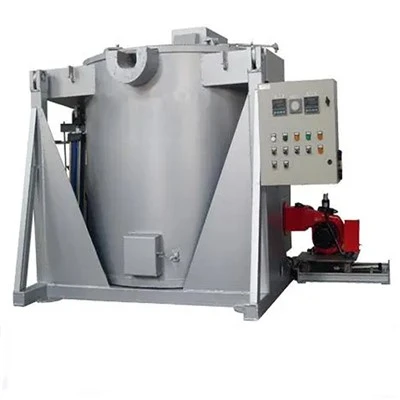
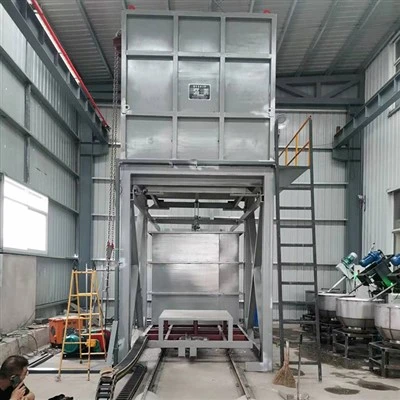
First, let’s start with the basics: what’s a bogie furnace? If you’re new, it’s not like your kitchen oven. A bogie furnace is a large, box-shaped industrial furnace with a movable platform (that’s the “bogie,” basically a big heavy cart) that rolls in and out of the furnace chamber to load and unload parts. These are used for super high-heat processes—think 1,000°C and up—so they need to hold a steady, precise temperature, otherwise your parts might warp, harden unevenly, or get ruined entirely. That’s where the temperature controller comes in.
At its core, a bogie furnace temperature controller is a smart, digital (or sometimes analog, but let’s be real—no one uses analog for critical processes anymore) device that regulates the furnace’s heat output. It’s like the thermostat in your house, but way more accurate. But here’s the key difference: your house thermostat only keeps your living room at 22°C, no big deal. A bogie furnace controller has to maintain a temperature within ±1°C (sometimes even tighter) over several hours, and adjust for all kinds of variables that mess with the heat—like when you roll a cold batch of parts into the furnace, or when the furnace’s insulation wears down a bit, or when the power fluctuates mid-process.
Let me give you a real example. A few years back, I worked with a customer who was heat treating aerospace-grade titanium blades. They were using an old, outdated controller that couldn’t hold a steady temp. Every time they loaded a new batch of blades, the furnace dropped 50°C, and it took 2 hours to bounce back. By then, the edges of the blades were overheated, and the cores were underheated—so 15% of their parts were scrap. They switched to a modern bogie furnace controller we supply, and suddenly, the temp dropped only 5°C when loading, and the controller adjusted the heating elements automatically to get back to the set temp in 10 minutes. Their scrap rate plummeted to 2%, and they saved thousands of dollars a month in wasted materials. That’s the difference this controller makes.
Now, let’s talk about how it actually works, without making your eyes glaze over. Most good controllers have three main parts: a sensor, a processor, and an output. The sensor is usually a thermocouple (a little device that changes voltage based on heat) that sits inside the furnace chamber, sending a constant stream of temp data to the processor. The processor is the “brain”—it compares the current temp to the one you set (like 950°C for sintering) and calculates exactly how much heat the furnace needs to put out right now. If the current temp is too low, it tells the furnace’s heating elements to turn up. If it’s too high, it turns them down or even shuts them off temporarily. The output is what actually sends that signal to the heating elements.
But here’s the thing—all controllers aren’t created equal. A lot of cheap controllers you might find online only do on/off: turn heat up when it’s cold, turn it off when it’s hot. That’s called “bang-bang control,” and it’s fine for a home furnace, but for a bogie furnace? It causes temperature swings, which mess up your parts. The good bogie furnace controllers use PID control—proportional, integral, derivative. That’s just a fancy way of saying the processor doesn’t just flip a switch; it adjusts the heat output smoothly, based on how far off the temp is, how long it’s been off, and how fast it’s changing. No big spikes or dips, just steady, consistent heat.
Another feature that’s non-negotiable for a bogie furnace controller is batch process programming. Most industrial processes aren’t just “heat to X and hold forever.” For example, if you’re tempering steel, you might need to heat slowly to 200°C, hold for 4 hours, then ramp up to 500°C, hold for 8 hours, then cool down gradually. A good controller lets you program all those steps—ramp rates, hold times, cool down speeds—so you can set it once and walk away. No one wants to stand around babysitting the furnace for 12 hours, right?
Wait, what about safety? That’s another big one. Bogie furnaces get crazy hot, and if something goes wrong—like a thermocouple breaks, or the furnace overheats because the controller failed—it can be a fire hazard, or even damage the furnace beyond repair. A quality controller has built-in safety features: over-temperature protection that shuts the furnace down if it gets too hot, alarm alerts if the temp drops too low, even records of every temp change so you can prove to regulatory bodies (like OSHA or aerospace standards) that your process was correct. We supply controllers that store data for up to a year, which is a game-changer for customers who need to comply with strict quality standards.
Now, let’s get into why, as a supplier, I care so much about getting this right. A lot of furnace manufacturers will slap a cheap controller on a bogie furnace just to cut costs. But when that controller fails, or can’t keep up with your process, you’re looking at downtime that costs hundreds of dollars an hour. I’ve seen customers lose entire production runs because a $500 controller went bad, and they had to wait 3 days for a replacement. That’s why we only supply controllers that are built tough—they can handle the dust, heat, and vibration that come with running a bogie furnace 24/7. We also offer customization: if your process needs a specific temp range, or you need the controller to connect to your plant’s SCADA system for monitoring, we can make that happen.
I also hear a lot of customers say, “My old controller works fine, why do I need a new one?” Maybe it works for now, but here’s the thing: as your production changes, or as you need to make higher-quality parts, you might outgrow it. Or when that old controller breaks, replacement parts might be impossible to find—old analog controllers have been out of production for decades. A modern bogie furnace temperature controller is compatible with almost all existing bogie furnaces, so you don’t have to buy a whole new furnace just to get a better controller. That’s a huge cost saver.
Let me give you another example. A customer who makes ceramic filters for engine parts was using a bogie furnace for sintering. Their old controller couldn’t handle the different temperature ramps they needed for a new type of ceramic, so they were having issues with cracks in the filters. They upgraded to one of our controllers, programmed the exact ramp rates they needed, and suddenly, the crack rate went from 10% to less than 1%. They even told us that the controller paid for itself in one month from the scrap they saved. That’s the value of a good controller—you don’t just get a device, you get a tool that makes your production better, cheaper, and more reliable.
Now, I know some of you are thinking, “How do I choose the right controller for my bogie furnace?” That’s where we come in. It’s not just about buying the cheapest one online. You need to consider your furnace’s size, the temperature range you need, the processes you run, and whether you need safety features or data logging. As a supplier, we don’t just sell controllers—we help you pick the right one. We’ll ask you questions like, “What material are you heat treating?” “Do you need to comply with any quality standards?” “Do you need remote monitoring?” and then we’ll recommend the best option for your budget and your needs.
A common mistake people make is matching the controller to the furnace’s size, not the process. A small bogie furnace might only need a 1200°C controller, but if you’re running a process that needs ±0.5°C accuracy, you need a controller that can handle that, regardless of the furnace size. Another mistake is ignoring compatibility: some controllers only work with specific brands of heating elements or sensors, so make sure the one you pick works with your existing equipment. We test all our controllers with a wide range of bogie furnaces, so you don’t have to worry about that.
And let’s talk about support. If your controller has a problem, you don’t want to be stuck with a device that you can’t get help for. We offer 24/7 support for all the controllers we supply—if you have an issue at 2 a.m. when a production run is about to start, we’ll walk you through fixing it over the phone, or even send a replacement part the same day. That peace of mind is worth more than any cheap controller you can find.
At the end of the day, a bogie furnace temperature controller isn’t just a small component—it’s the heart of your bogie furnace’s performance. It’s what keeps your parts high-quality, your scrap rate low, and your production running smoothly. As someone who’s been in this industry for years, I’ve seen how a good controller can turn a so-so furnace into a workhorse, and a bad controller can ruin even the best equipment.
If you’re looking to upgrade your current controller, or if you’re buying a new bogie furnace and need a reliable controller to go with it, don’t waste time with knockoff brands or cheap options. We supply top-of-the-line bogie furnace temperature controllers that are built to last, easy to program, and backed by support you can count on. Whether you run a small metal shop or a large aerospace manufacturing plant, we have a controller that fits your needs.
Don’t let a faulty controller hold your production back. Reach out to us today to chat about your specific requirements, and we’ll help you find the perfect solution for your bogie furnace. Let’s make sure your next heat treat or sintering run is smooth, efficient, and gives you consistent, high-quality parts.
Annealing Furnace References
- ASM International. (2018). Heat Treater’s Guide: Practices and Procedures for Iron and Steel. ASM International.
- Jones, A. (2021). Industrial Furnace Control Systems: A Practical Guide. Industrial Press.
- National Fire Protection Association. (2020). NFPA 86: Standard for Ovens and Furnaces. National Fire Protection Association.
Jiangsu Fangwei Furnace Industry Co., Ltd.
Jiangsu Fangwei Furnace Industry Co., Ltd. is one of the most professional bogie furnace manufacturers and suppliers in China. With abundant experience, we are committed to providing high quality customized products with competitive price. Please feel free to buy advanced bogie furnace made in China here from our factory.
Address: No.168, HuangNian Bridge, DaoShu Town, Danyang City, JiangSu Province, China
E-mail: fangwei@fwfurnaces.com
WebSite: https://www.fwfurnaces.com/
