If you’ve spent any time around material handling, logging, construction, or scrap yards, you’ve probably heard someone throw around terms like “fixed grapple” and “rotating thumb” like they’re interchangeable. From where I sit as a fixed grapple supplier, that’s a common—and costly—misconception. For 12 years, I’ve tailored equipment for operators who value reliability, low maintenance, and consistent performance, and over that time, I’ve seen too many teams waste money on rotating thumbs when a fixed grapple is the exact solution they need. Today, I want to break down the real, practical differences between these two tools, not just in specs, but in how they perform day in and day out, so you can pick the right one for your job. Fixed Grapple
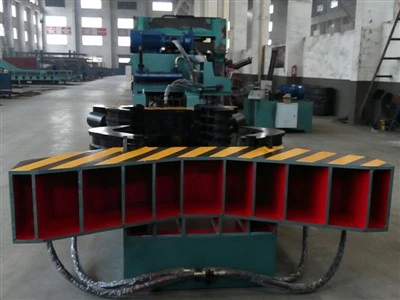
First, let’s start with the core design, because that’s where every other difference stems from. A fixed grapple, as the name suggests, has a set of rigid, curved tines welded or bolted directly to the face of your excavator, loader, or telehandler attachment arm. That’s it. No pivot joint, no motor, no gearbox, no extra hydraulic lines to run. The tines are shaped to wrap around material—logs, scrap metal, municipal waste, round stock—and they open and close along a fixed axis, right in line with the attachment’s main pivot. A rotating thumb (sometimes called a hydraulic thumb), on the other hand, is a separate, articulating arm that mounts to the side of your main attachment, not the front. It has its own hydraulic cylinder and a swivel joint at its base, so it can swing up, down, left, and right, independent of your attachment’s main movement.
That design gap translates immediately to maintenance. Let’s be honest: in heavy material handling, downtime isn’t just annoying—it cuts into your profit. Rotating thumbs have a lot more moving parts: a swivel bearing that’s exposed to dirt, dust, and debris, a hydraulic cylinder that’s vulnerable to punctures from sharp metal or logs, and hoses that can fray from constant movement. I’ve had customers come to me after burning out their third rotating thumb swivel in a year, because they’re working in a scrap yard with sharp steel that grinds into the bearing every time they move. Fixed grapples have almost no serviceable parts beyond occasional tine replacement. We’ve had a fixed grapple we sold in 2010 that’s still running in a logging operation in northern Minnesota, with only one tine replaced and zero issues with the frame. That’s the kind of reliability you don’t get with a rotating thumb.
But what about performance? Let’s talk about that, because it’s not one-size-fits-all. Rotating thumbs get a lot of hype because they’re versatile, right? You can reach around a log that’s stuck under a pile, swing it to line up with a truck bed without moving your whole machine, sort small pieces of scrap into separate piles. That works great for operators who need that flexibility, especially in jobs with mixed, unorganized material. But here’s the catch: that flexibility comes at the cost of clamping force. A rotating thumb is designed to reach, not squeeze. Its hydraulic system splits power between swinging the thumb and clamping it, so you often end up with weaker clamping pressure. For dense, heavy material—like large boulders, thick logs, or compressed scrap steel—a rotating thumb can slip, even if you crank the cylinder. I’ve seen a customer try to load 4-foot steel beams into a truck with a rotating thumb, and half the time the beams would slip out mid-lift, damaging the truck bed and wasting 20 minutes reloading. A fixed grapple, though, uses the full power of your attachment’s main hydraulic system for clamping. The force is directed straight into the tines, so you get a solid, consistent grip on heavy material. No slipping, no repositioning every two minutes, which saves hours on a 10-hour shift.
There’s also the matter of footprint and space. Rotating thumbs add bulk to the side of your attachment, which can be a big problem in tight spaces. If you’re working in a narrow construction site, a scrap yard with stacked bales, or a forest where trees are spaced close together, that extra arm sticking out can catch on obstacles, knock over nearby material, or even damage your machine. Fixed grapples mount flush to the front of your attachment, so they don’t extend out past the tines. That means you can work in spaces where a rotating thumb would never fit. A logging customer of mine in the Pacific Northwest told me last year that switching from a rotating thumb to a fixed grapple let him harvest 15% more trees in the same amount of time, because he didn’t have to move his whole machine as often to avoid hitting surrounding trees.
Another point a lot of operators overlook: cost. Upfront, a rotating thumb might seem cheaper, right? You’re buying a smaller, separate part, not a full grapple. But over time, that adds up. Let’s do the math: a mid-sized rotating thumb for a 20-ton excavator runs about $12,000. A comparable fixed grapple runs about $15,000 upfront. But then add maintenance: rotating thumbs need new swivel bearings every 12 to 18 months, at $2,000 a pop, plus new hoses, occasional cylinder rebuilds, and downtime when they break. A fixed grapple only needs tine replacement every 3 to 5 years, at $500 a tine, and rarely has major component failures. Our customers report that over a 5-year period, a fixed grapple saves them between $8,000 and $10,000 compared to a rotating thumb. That’s not just a number—it’s money back in your pocket, not spent on repairs.
Wait, I don’t want to paint rotating thumbs as bad, because they absolutely have their place. If you’re a scrap recycler sorting mixed metal, or a landscaper moving small, irregular material like branches and concrete chunks, a rotating thumb can be a huge asset. If you work on job sites where you’re constantly repositioning material to fit tight spaces, that flexibility is worth the extra cost and maintenance. But if you’re in a job that’s focused on moving large, heavy, consistent material—logs, bulk construction debris, large scrap bundles, boulders—fixed grapples are the better choice.
Let me give you a real example. Last year, we had two customers approach us at a material handling trade show. One was a logging company in Alabama, moving 2-foot diameter pine logs from the woods to processing trucks. He’d been using a rotating thumb, and was frustrated because the slips and repositioning were making him miss his daily quota by 20% on slow days. We sold him a fixed grapple, and three months later, he sent us a video of his operator loading logs at a rate of 120 logs an hour, compared to the 90 he’d been getting with the thumb. The other customer was a scrap yard in Chicago, sorting mixed metal and concrete chunks. He needed the flexibility to reach around piles and sort small pieces, so a rotating thumb was the right fit for him. The key is matching the tool to the job, not picking what’s trending.
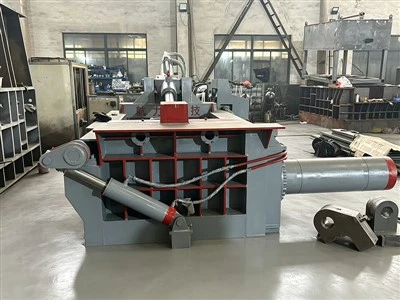
I’ve been in this business long enough to see operators make the same mistake over and over: they buy whatever the sales rep pushes, or what their buddy uses, without thinking about their specific workflow. A fixed grapple isn’t for every job, but if your work revolves around heavy, consistent material, it’s hard to beat. It’s low maintenance, reliable, fits in tight spaces, and saves you money in the long run.
Alligator Shear If you’re not sure which is right for your operation, don’t guess. Reach out to my team to talk through your daily tasks, the material you move, and the spaces you work in. We’ve got over a decade of experience matching fixed grapples to all kinds of operations, and we can help you find a solution that fits your needs, not just a one-size-fits-all tool. Don’t let another season of missed quotas, unexpected repairs, and wasted time hold you back.
References
- Material Handling Equipment Association (MHEA) “Attachment Performance Metrics for Heavy-Duty Material Handling” 2022
- Logging and Forest Equipment Review “Grapple Design and Operational Efficiency” 2021
- Scrap Recycling Industry Report “Cost Comparison of Fixed Grapples vs. Hydraulic Thumbs” 2023
- Construction Equipment Guide “Space Requirements for Attachment Design” 2022
Jiangyin Hangli Technology Co., Ltd.
Jiangyin Hangli Technology Co., Ltd. is one of the most professional fixed grapple manufacturers and suppliers in China. We are committed to providing high quality custom service and OEM service with low price. We warmly welcome you to buy high-performance fixed grapple for sale here from our factory. Also, pricelist is available.
Address: No. 11, Louxia Road, Zhouxi Village, Zhouzhuang Town, Jiangyin City, Wuxi City, Jiangsu Province, China
E-mail: sherry@hanglimachinery.com
WebSite: https://www.hanglirecycling.com/
