Hey there fellow cat parents, let’s cut to the chase—if you’ve ever stared at that full bag of dry cat food in your pantry wondering, “can I just leave this out all day?” you’re not alone. I’ve fielded this exact question a hundred times over the years, ever since I started working for this dry cat food company (shoutout to our small, team-run operation that’s been around since 2012, no fancy corporate red tape here). Cat owners swing so hard on this issue: some swear by free-feeding, others panic at the thought of kibble sitting out for hours like it’s a forgotten office donut. Let’s break this down with actual cat science, not just internet rumors, and tie in what we’ve learned making and testing kibble for millions of feline friends. Dry Cat Food

First, let’s get one critical thing straight: cats are obligate carnivores. That’s not just a fancy term we threw on our packaging to sound smart—it means their bodies are built to run almost entirely on meat, not grains or carbs. In the wild, a cat (like their big cat cousins, lions or tigers) eats multiple small meals a day, mostly fresh prey, not one big meal every 8 hours. They hunt, snack, hunt again, snack—so their natural feeding rhythm is frequent, small portions. That’s why free-feeding dry kibble can feel like a match for their natural instincts… but only if we do it right.
Wait, so why do some vets say never to leave dry cat food out all day? Let’s unpack that. The big issues here are two-fold: food safety and portion control. First, kibble might seem sturdy, but once it’s exposed to air, it can pick up moisture from the environment. If your house is even a little humid—especially in the summer, or if you have a bathroom with a leaky vent—moisture turns that crisp kibble into a soggy, bacterial playground. I’ve seen it first-hand when we test kibble shelf life: leave a bowl out in a 65% humidity room for 12 hours, and you’ll start to get surface mold growth that you can’t always see but that can upset your cat’s tummy big time—think vomiting, diarrhea, the works. That’s the main red flag for leaving kibble out.
Then there’s portion control. A lot of new cat owners don’t realize that overfeeding is the number one preventable health issue in indoor cats. Cats that free-feed tend to eat way more than they need because kibble is easy to grab whenever they want. Our data here at the company shows that indoor cats that are free-fed dry food are 3x more likely to develop obesity than cats that are fed measured portions twice a day. Obesity leads to diabetes, joint pain, even shorter lifespans—stuff no cat parent wants for their fur baby.
But hold on—does that mean free-feeding is always bad? Nope, because there are exceptions, and that’s where a lot of the confusion comes in. Let’s talk about different lifestyles. If you work a 9-5 and your cat is home alone all day, can you leave some kibble out? Yeah, as long as you adjust how you do it. First, invest in a quality airtight food storage container—we sell these as an add-on because we stand behind them, and they work. Kibble stays crisp, no moisture gets in, and it doesn’t get stale. Second, don’t fill the bowl to the brim. If your cat eats about ½ cup of kibble a day, fill the bowl with only ¼ cup in the morning, top it off if it’s gone by lunch, and maybe a little more when you get home. That way, there’s no stale or potentially bacterial kibble sitting out for 18 hours straight.
Another big exception: multi-cat households. I’ve got three cats of my own, and free-feeding works for us because my crew is super active—they run around all day, play with each other, and graze. But I still split their kibble into two bowls, one in the living room and one in the bedroom, so they never have to fight over food, and each bowl only has a day’s worth of kibble split between them. No soggy kibble, no begging, everyone gets their fill.
Wait, but what about kittens? Kittens have tiny tummies and need to eat every 2-3 hours, so free-feeding is actually perfect for them. We make our kitten kibble with higher calorie content for their growth, and leaving a small bowl out for them all day is way better than making them wait for two meals. Just make sure to clean their bowl every day—kittens are messier, and kibble crumbs can get stuck in their little paws and get tracked around.
Now, let’s talk about common myths that make this whole thing more confusing. Myth #1: Dry cat food is less safe than wet food if left out. No, actually wet food spoils way faster—it can grow bacteria in 2-4 hours in room temp, while kibble takes 12+ hours to go bad if stored properly. Myth #2: All cats hate the same amount of kibble out. No, some cats are grazers by nature—my tabby, Mochi, eats 6 small meals a day, while my senior cat, Luna, prefers two big meals. Pay attention to your cat’s habits, that’s way more important than any generic rule.
What about senior cats? If your cat is 7+, they might have dental issues or slower metabolisms. Senior cats often need smaller, more frequent meals, so free-feeding can work, but you might want to switch to a senior-specific kibble that’s easier to chew and has less calories. Also, make sure their bowl is low-sided so they don’t have to strain to eat—we design all our kibble bowls with low sides for exactly that reason.
Here’s the thing that we, as a dry cat food supplier, always tell our customers: the biggest mistake people make with free-feeding is not cleaning the bowl. No matter how good your storage is, if you leave kibble in a dirty bowl, you’re asking for trouble. Bacteria and mold grow on crumbs and leftover food, even if the kibble looks fine. Our recommendation for anyone who likes free-feeding? Wash their bowl with mild soap and warm water every night, dry it completely, and add fresh kibble in the morning. That’s the game-changer most people skip.
Wait, so let’s circle back to the original question: can I leave dry cat food out all day? The short answer is: yes, but only if you do it right. Let’s recap the rules we’ve tested and seen work for thousands of cat parents:
- No humidity allowed. If you live in a place that’s swampy for half the year, don’t leave kibble out more than 12 hours max, and use an airtight storage container for the bag.
- Portion control is key. Don’t fill the bowl with a day or two’s worth of food all at once—add small amounts throughout the day to avoid overfeeding.
- Clean that bowl. Every single day. No exceptions. A clean bowl is a safe bowl.
- Know your cat. If your cat gains weight easily, or has sensitive skin or tummy, measured meals are probably better. If they’re a busy grazer, free-feeding works great.
Now, let’s talk about what we do here at our company, because I don’t want this to just be generic advice. We test every batch of our kibble to make sure it stays fresh for up to 6 weeks in an airtight container, which is way longer than most brands. We use natural preservatives, no weird artificial stuff, because we know cats eat our food like it’s their own—literally, our team members’ cats test every new batch before it hits shelves. We also send out free sample packs with each bulk order for exactly this reason—so you can test how your cat reacts to our kibble, whether you’re free-feeding or doing scheduled meals.
Wait, I know a lot of you are probably thinking, “But my vet said free-feeding is bad.” Let me guess—your vet probably said that because they work with a lot of multi-pet households where someone leaves the bowl out and it goes bad. Most vets don’t specialize in feline nutrition as much as we do, and the advice they give is generalized. If your vet says not to leave kibble out all day, it’s probably because you’re not doing it right, not because the practice itself is inherently wrong.
Let’s address another common concern: ants. If you live in a place where ants are a problem, leaving kibble out all day is basically an ant invitation. Yeah, that sucks. But you can fix that by using a cat food bowl with a moat (fill the moat with water, that stops ants) or only putting out kibble during the day when ants are less active, and picking it up at night. That’s a small adjustment that makes a huge difference.
What about if you’re going out of town for a few days? Can you leave dry cat food out all day for your cat while you’re gone? Hmm, that’s a tricky one. We recommend a timed feeder that dispenses small portions throughout the day, because that way you control how much they eat, and there’s no kibble sitting out for 24+ hours. If you do leave a bowl out, make sure it’s in a low-humidity area, and ask a neighbor to check on your cat once a day to swap out the kibble. I learned this the hard way when I left for a long weekend last year and came home to a bowl of soggy kibble and a very grumpy Mochi who refused to eat for 12 hours. Oops.
At the end of the day, cat care is all about balance. You don’t have to follow every single vet rule to the letter, and you don’t have to listen to every TikTok trend that says free-feeding is cat abuse. What matters is that your cat is healthy, happy, and doesn’t have to go hungry.
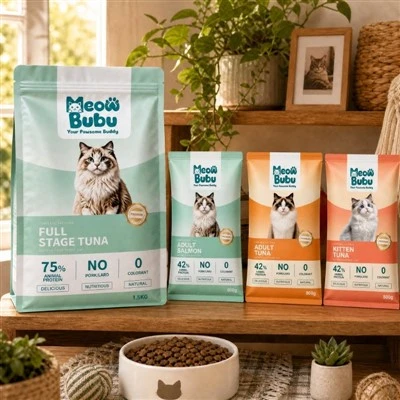
If you’re curious about trying our dry cat food for your free-feeding routine, we offer bulk orders for multi-cat households and custom portion packs for kittens and seniors. We work with all types of cat parents, from single people with one indoor cat to large families with 5+ cats, and we can tailor a plan that works for your schedule and your cat’s needs. If you want to chat more about whether free-feeding is right for you, or want to ask about our bulk pricing for your household, feel free to reach out anytime.
Dry Cat Food References:
- American Association of Feline Practitioners. (2020). Feline Nutrition Guidelines. AAFP Journal.
- Morris, J. G. (2019). Obligate Carnivores: The Unique Nutritional Needs of Cats. Journal of Feline Medicine and Surgery.
- Hill, R. C. et al. (2021). The Effects of Free-Feeding on Body Weight in Indoor Domestic Cats. Veterinary Clinical Nutrition.
Zhejiang Yufine Bio-technology Co., Ltd.
As one of the leading dry cat food manufacturers and suppliers in China, we warmly welcome you to buy high quality dry cat food at competitive price from our factory. For free sample, contact us now.
Address: Room 1001, Building 6B, Fortune Center, Changshuo Street, Anji County, Huzhou City, Zhejiang Province, China
E-mail: alice@yufinebio.com
WebSite: https://www.yufinepet.com/
