If you’ve been working with compact substations for any length of time, you know they’re the workhorses of modern electrical infrastructure. They fit neatly in utility yards, commercial parking lots, even small industrial sites—replacing bulky, outdated equipment that required way more space and maintenance. But like any piece of electrical gear, compact substations don’t stay perfect forever. After 10, 15, or even 20 years in service, they start showing their age: outdated components that can’t handle today’s higher energy demands, frequent breakdowns that derail operations, or safety features that don’t meet the latest code standards. Compact Substation
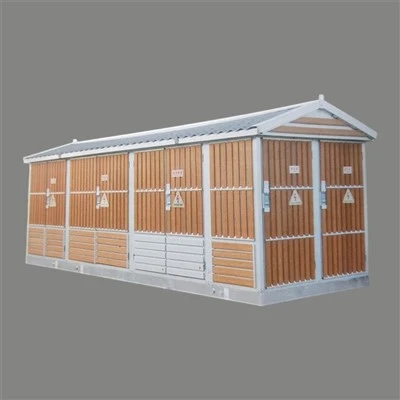
I’ve been a compact substation supplier for 12 years now, and I’ve sat across the table from more clients than I can count staring at a dented, rusted old unit, asking, “Do I repair this, or do I upgrade it?” The answer isn’t one-size-fits-all. Too many people waste money patching up a substation that’s already past its prime, or jump into a full replacement without realizing a smart upgrade can give them more capacity, better reliability, and longer life for a fraction of the cost of a new unit. Today, I want to walk you through exactly how we approach upgrading a compact substation—from the initial assessment to final commissioning—using real experiences from the clients I’ve worked with over the years.
Let’s start with the first step that most people skip: the honest assessment. A few years back, I had a client, a small municipal utility in central Ohio, that came to me with a 1998 compact substation powering three local elementary schools and a community pool. For years, they’d been patching minor issues: replacing blown fuses every summer after the pool’s filtration system kicked on, repainting the corroded enclosure, and updating a few circuit breakers here and there. But by 2020, the unit was throwing fault codes at least once a month, and their load data showed they were running at 92% capacity during peak hours—way over the recommended 80% threshold for old equipment.
The first thing we did was bring in our team of field technicians and a licensed electrical engineer to conduct a full audit, not just of the physical unit, but of their entire electrical profile. We walked them through three key checks:
First, we evaluated the existing infrastructure. We measured the size of the transformer, the type of busbars, the condition of the enclosure, and all internal wiring. This substation was a pad-mount unit made of carbon steel, with no corrosion protection beyond the original paint. The transformer was an oil-filled unit with a 2,000 kVA rating, which had been standard in the 90s, but today’s energy-efficient units are far more compact and powerful. The busbars in this unit were aluminum, which had developed minor pitting from 20 years of moisture in the enclosure—something we could see once we pulled off the side panels.
Second, we mapped their current and projected load. The Ohio utility’s growth wasn’t just from new buildings; it was from the schools adding LED lighting and electric bus chargers, and the pool adding a new heating system. We looked at their annual peak demand, load growth projections for the next 10 years, and even asked about upcoming projects, like a new fire station that would tap into the substation next year. That’s when we realized they needed at least a 2,500 kVA capacity—they didn’t need a whole new unit, but their existing transformer was too small, and the busbars couldn’t handle the extra load.
Third, we checked against current safety and code standards. The 1998 unit was built to meet NEC 1996 standards, which is outdated now. It had no arc flash mitigation features, no remote monitoring, and the grounding system was only rated for 10kA fault current—today, the utility’s local code requires 25kA for new installations. When the engineer ran the numbers, we found that if a fault occurred in that old unit, the arc flash energy would be 40 cal/cm²—enough to cause serious injury to anyone working on it. That was a non-negotiable red flag.
This audit step is critical. I’ve had other clients come to me after skipping this step, thinking they just need a new transformer, only to find out their enclosure is too small to fit a larger unit, or their grounding system can’t handle the new fault current. Spend a week on the audit, don’t rush it—this is where you avoid costly mistakes later.
Once we had the audit results, we presented the client with two options: repair (which would’ve cost $45,000 and only extended the life by 5 years, with no capacity increase) or upgrade (which cost $70,000 and extended the life by 15 years, with 25% more capacity, and full safety features). They went with the upgrade, and here’s what that process actually looked like—step by step, with real-world takeaways.
The first part of the upgrade is what I call “envelope preparation.” The old substation’s enclosure was rusted, and too small for the new, larger transformer. So we didn’t replace the whole enclosure—we had our custom enclosure team fabricate a stainless steel extension that bolted directly to the existing unit, which saved us thousands of dollars compared to a new enclosure. We sandblasted the old paint, applied a two-part epoxy coating for corrosion protection (even better than the original paint), and added ventilation grilles with dust filters to keep moisture out—something the old unit never had. We also upgraded the locking system to high-security, padlock hasps that comply with NEMA standards, and added a weatherproof seal around all cable entry points to prevent water intrusion, which is the number one cause of substation failures in humid climates.
Next came the core component upgrade: the transformer. The old oil-filled transformer was not only inefficient (it had 1.5% no-load losses, compared to today’s 0.3% for a high-efficiency unit) but it was also too small. We replaced it with a dry-type transformer, which is safer (no flammable oil, perfect for near schools and public spaces) and has a smaller footprint. For this Ohio client, the dry-type unit fit perfectly into the extended enclosure we’d built, giving them the extra 500 kVA they needed. We also installed a transformer temperature monitoring system, which sends real-time alerts to the utility’s control room if the unit overheats—something the old unit had no way of doing. That’s a big win for reliability; no more sudden, unplanned failures because of overheating.
Then we moved to the low-voltage and medium-voltage switchgear. This is where most of the old substation’s safety and functionality gaps were. The 1998 switchgear was manually operated, no remote control, and had no arc flash protection. We replaced the old circuit breakers with vacuum circuit breakers, which are far more reliable than the old oil-based ones, and added arc flash mitigation barriers that prevent arc flash incidents from spreading. We also installed a smart monitoring system—our in-house built Compact Monitor 2.0—that tracks voltage, current, power factor, and fault events 24/7. For the Ohio utility, this meant they could monitor the substation from their office, schedule maintenance during off-peak hours instead of reacting to emergencies, and even see when the electric bus chargers were drawing extra load, so they could adjust other systems to balance it. We also upgraded the busbars from aluminum to tin-plated copper, which is more resistant to pitting and has a higher current rating—perfect for handling the new load from the schools and pool.
One of the most important parts of this process is coordinating the shutdown. The Ohio substation served three schools and the pool—we couldn’t just shut it down for a week. So we scheduled the upgrade during summer break, when the schools were empty and the pool was only open on weekends. We split the work into three 12-hour shifts over 10 days: first, we drained the old transformer and removed it on a Friday afternoon, then installed the new transformer and switchgear over the weekend, and finally tested the system and brought it back online on Monday morning, right before the new school year started. We worked closely with the utility’s electrical team every step of the way, and we even provided them with a dedicated contact who was on-site 24/7 during the upgrade. That’s something I always emphasize: communication is key. If you’re upgrading a substation that powers critical infrastructure, you can’t afford miscommunication or delays.
After the physical installation comes commissioning and testing. This isn’t just flipping a switch and calling it done. Our team did three levels of testing: first, a continuity test to make sure all wiring connections were tight and correct, then a load test to simulate peak demand and make sure all components could handle it, and finally a safety test to check the arc flash rating, grounding system, and surge protection. For the Ohio client, the load test showed the substation was running at only 65% capacity—way below their projected 80% peak, giving them plenty of room for future growth. We also trained their two on-site maintenance technicians on how to use the new smart monitoring system, perform basic troubleshooting, and inspect the upgraded components. That training is free for all our clients—we don’t just sell a substation, we support it.
The end result for that Ohio utility? A substation that was half the cost of a new unit, has 25% more capacity, a 15-year service life left, and meets all current safety and code standards. They haven’t had a major failure in three years, and their energy bills are down 12% thanks to the high-efficiency transformer. That’s the kind of upgrade that makes sense—practical, cost-effective, tailored to the client’s needs.
But I’ve also had clients where upgrading wasn’t the right call. Last year, a manufacturing plant in Indiana came to me with a compact substation that was 22 years old. When we did the audit, we found the enclosure was so corroded it had structural issues, the transformer had failed two years in a row, and the load was growing by 10% every year—faster than even a scaled-up upgrade could handle. In that case, we recommended a full replacement, but we made sure it was a compact substation tailored to their exact load needs, not a one-size-fits-all unit. The key here is knowing when to upgrade vs. when to replace, and that’s why the initial assessment is non-negotiable.
Another common upgrade I see clients needing is for renewable energy integration. More and more of our clients are adding solar panels or battery energy storage systems (BESS) to their sites, and their old compact substations can’t handle bi-directional power flow. Last year, a retail park in Texas upgraded their substation to add a 500 kW solar array, and our team modified the switchgear to support both incoming grid power and outgoing power from the solar panels. We added a power factor correction system too, which reduced their demand charges by 18%—that’s a huge win for commercial clients, who pay a lot for demand charges.
If you’re thinking about upgrading your compact substation, here are a few mistakes I see people making all the time that you should avoid. First, don’t cut corners on the assessment. I’ve had a small business owner skip the audit, assume their old transformer was fine, and end up having to rip out half the substation a year later because the new battery system wouldn’t fit. Second, don’t use generic components. Compact substations are custom-fit for specific sites, so upgrading with off-the-shelf parts that don’t match your enclosure or load will cause more problems than it solves. Third, don’t forget about training. The new smart systems and components are only useful if your maintenance team knows how to use them. We always include a full training session, and we offer ongoing support for as long as you own the unit. Fourth, don’t rush the timeline. It’s tempting to get the upgrade done as fast as possible, but proper testing and coordination will prevent costly downtime later.
At the end of the day, upgrading a compact substation is about extending the life of your existing infrastructure while meeting today’s needs. It’s not just about replacing old parts—it’s about making your substation safer, more reliable, and ready for whatever comes next: new equipment, energy efficiency goals, renewable energy, or future growth. For the last 12 years, I’ve worked with all kinds of clients, from small municipalities to large industrial sites, and I can tell you that a well-done upgrade almost always makes more sense than a full replacement—if you do it the right way.

If you’re tired of dealing with frequent substation failures, want to increase your capacity without breaking the bank, or need to bring your unit up to current safety standards, I’d be happy to walk through your options with you. We can start with a free, no-obligation audit, where our team will assess your current substation, map your load needs, and give you a clear breakdown of what upgrade will work best for you. Don’t let an outdated substation hold your operations back—let’s turn it into a reliable, modern piece of infrastructure that will serve you for years to come.
Compact Substation References
- National Electrical Code (NEC) Article 250: Grounding and Bonding, 2023 Edition
- IEEE Std C57.12.00: Standard for General Requirements for Liquid-Immersed Distribution, Power, and Regulating Transformers, 2020 Edition
- Compact Substation Design and Installation Guidelines, International Electrotechnical Commission (IEC) 62271-200, 2011 Edition
- U.S. Department of Energy: Energy Efficiency and Conservation Block Grant Program Report on Electrical Infrastructure Upgrades, 2022
- Arc Flash Hazard Calculation Methods, Occupational Safety and Health Administration (OSHA) 29 CFR 1910.303, 2021 Edition
Shijiazhuang Nuo’an Electric Power Equipment Co., Ltd.
As one of the most professional compact substation manufacturers and suppliers in China, we’re featured by quality products and good price. Please rest assured to buy advanced compact substation made in China here and get pricelist from our factory. Customized orders are welcome.
Address: NW Corner, Heping Rd & Xingsingsi St, North Baifo Village, Chang’an Dist, Shijiazhuang, Hebei, China
E-mail: nuoandianli3@163.com
WebSite: https://www.nuoanpower.com/
